
Civil Engineering Works Business method03 Ground Improvement Work
We have a track record of using various methods
in ground improvement.
Toa-Tone Boring applies the Solidification Method in its ground improvement projects. This technique enhances the bonding between soil particles by mixing and injecting cement-based solidifying agents into the ground, thereby improving its strength and stability. By selecting appropriate solidifying agents and combining them with suitable construction methods according to the properties of the target ground and the construction objectives, this approach achieves uniform and high-quality ground improvement.
Epo-Column Method
Deep Mixing Method Using Composite Counter-Rotating Mixing Blades Achieving High Quality, Large Diameter, and Low Displacement Improvement
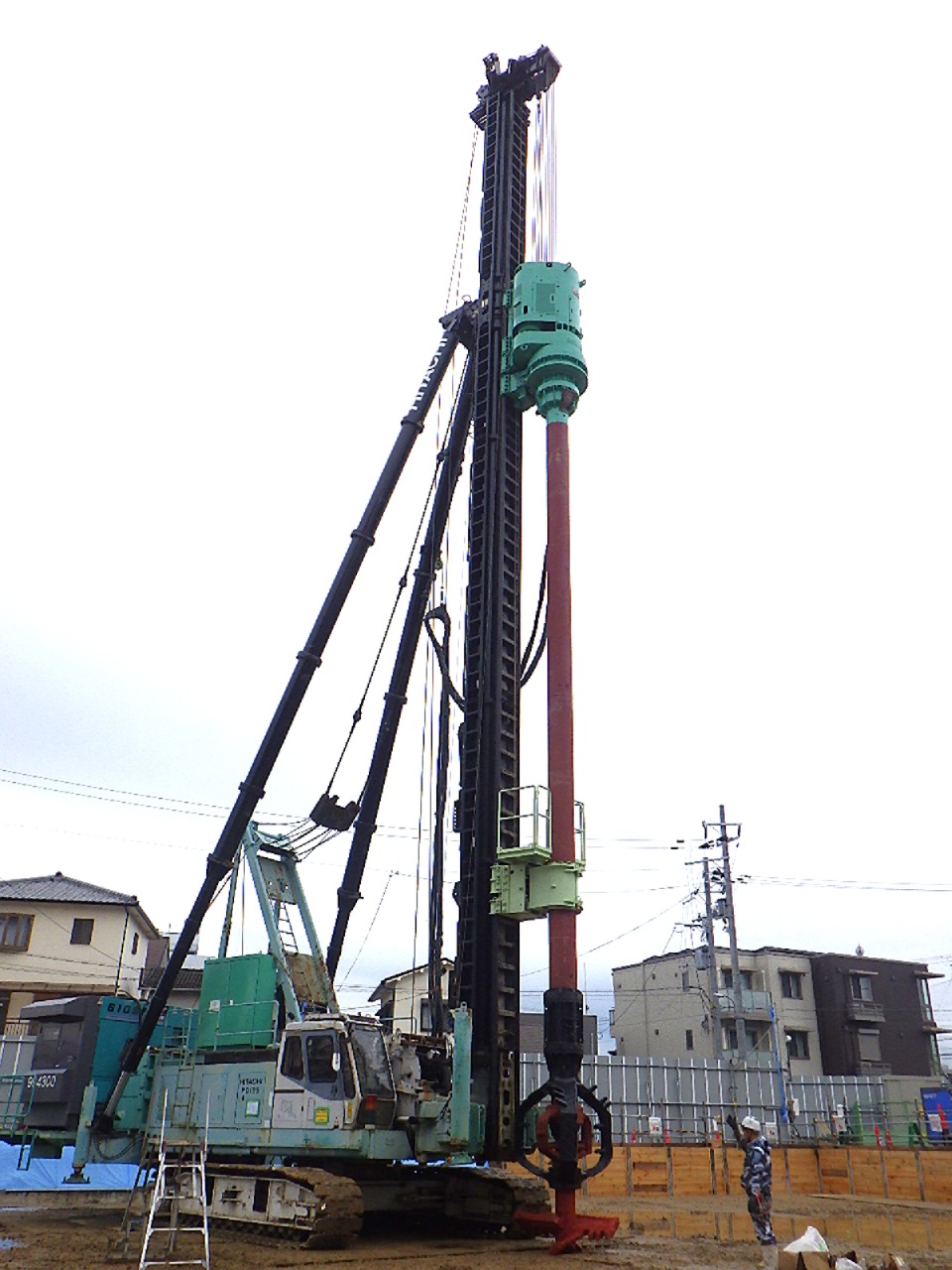
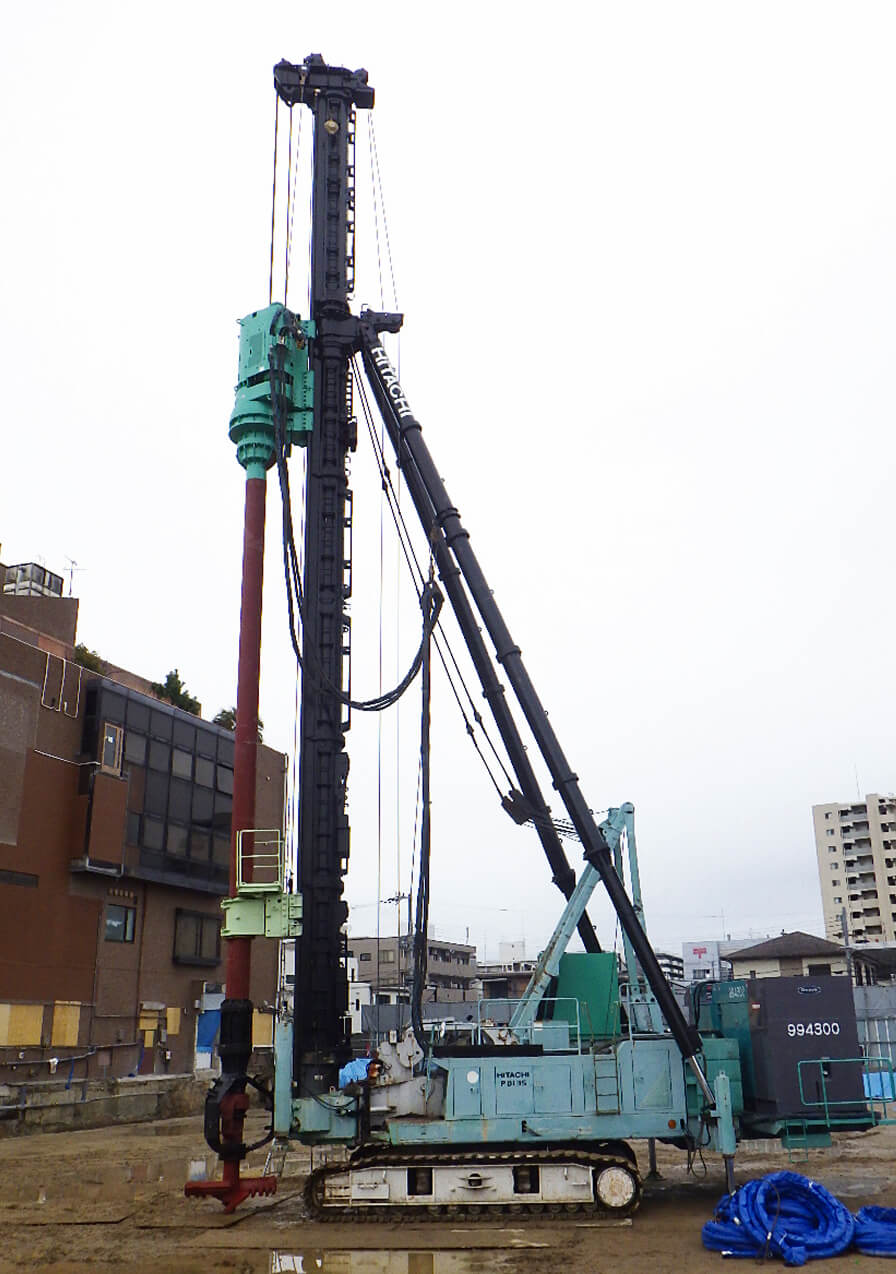
Overview
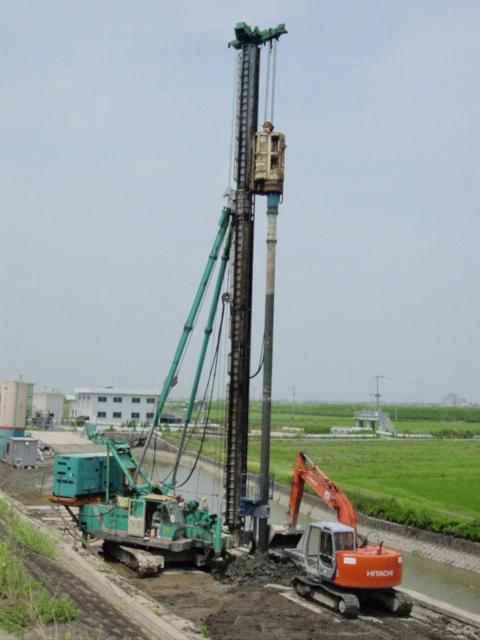
The Epo-column Method is a ground improvement technique that injects cement-based slurry into in-situ soil while mixing, kneading, and solidifying the ground using composite counter-rotating mixing blades (Epo-column blades).
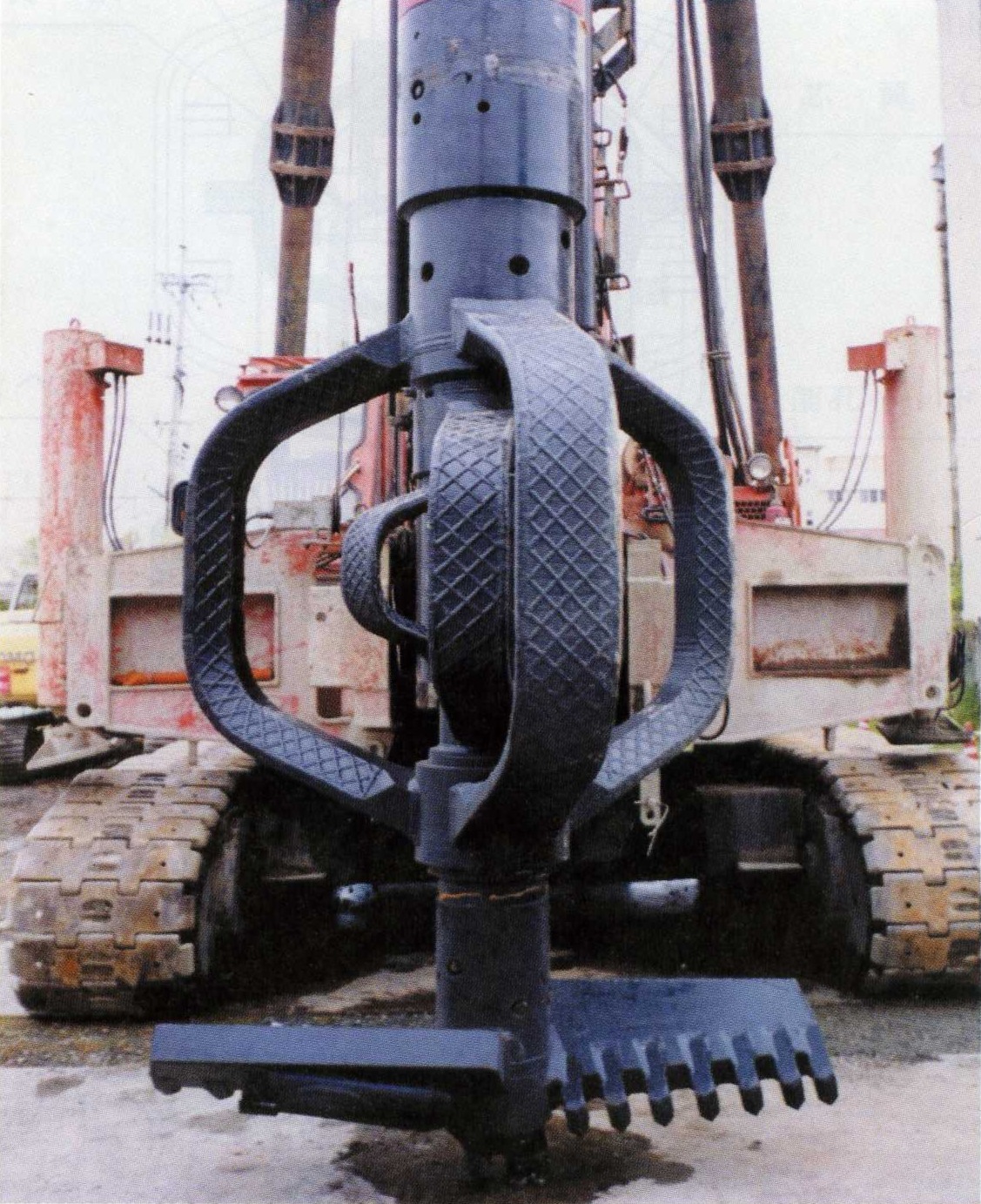
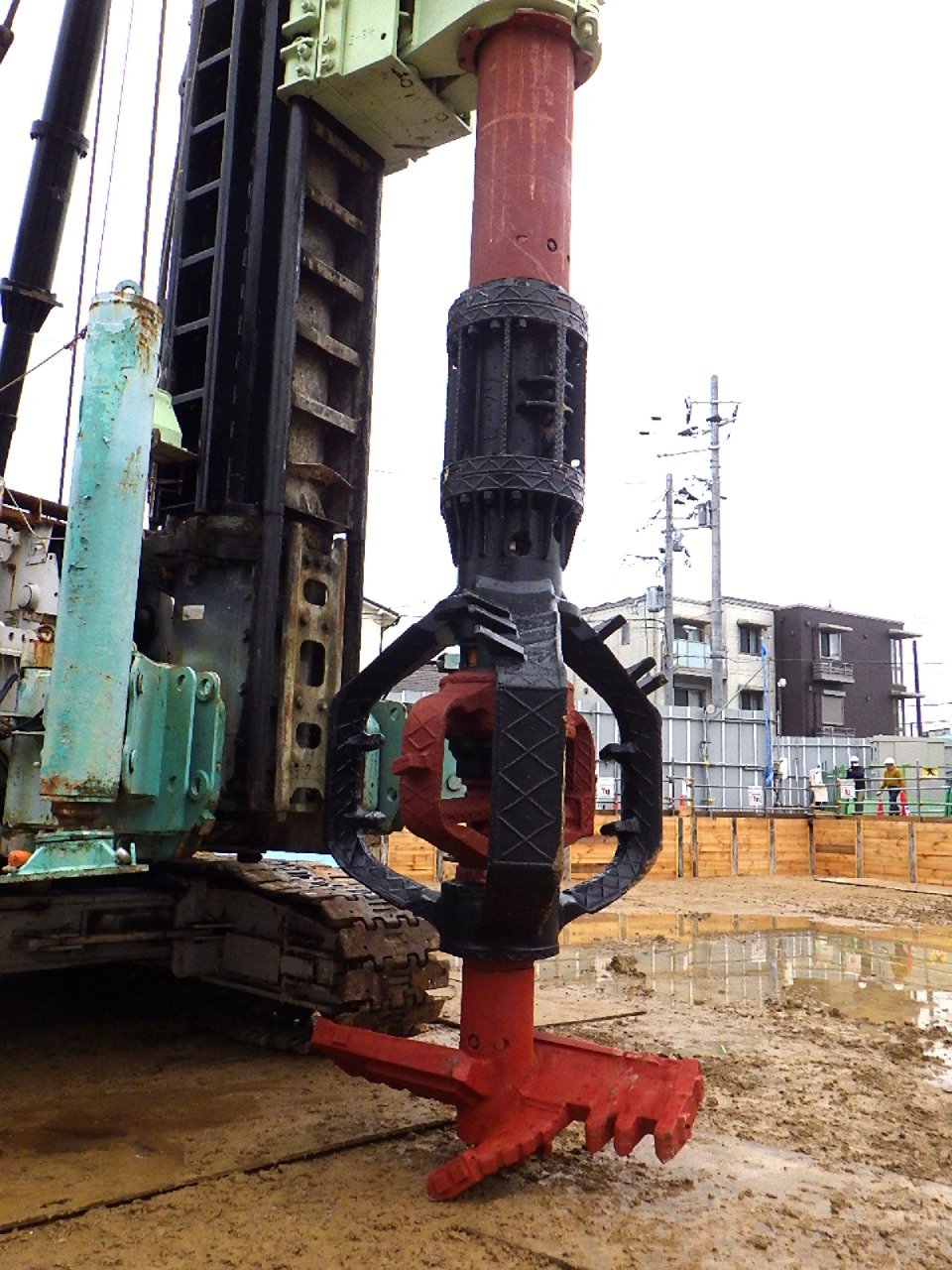
These blades consist of a cage-type outer blade rotating in one direction, an inner blade rotating in the opposite direction inside it, and a core blade rotating in the opposite direction of the inner blade.
By applying low-speed, high-torque operation, efficient soil mixing and stabilization are achieved.
Features
- Formation of Uniform and High-Quality ColumnsThe outer blade and core blade rotate in the same direction, while the inner blade and drilling head rotate in the opposite direction, generating three-dimensional mixing with a forced kneading effect.
As a result, soil co-rotation and insufficient mixing are prevented, enabling the construction of uniform and high-quality columns. - Shortened Construction Period and Reduced CostConstruction with column diameters up to φ2,500 mm is possible, enabling shorter construction periods and cost reduction compared with standard productivity rates.
- High Mixing PerformanceSince both ends of the outer blade and inner blade of the Epo-column blade are fixed to the rotation shaft, high rigidity and resistance to damage are ensured.
This enables stable operation even in cobble and gravel layers. - Low-Displacement Construction Enables Work Near Existing StructuresThe slurry discharge suppression function of the Epo-column blade, combined with the spiral rod, guides the increased internal pressure generated by slurry injection upward along the rotation shaft.
This releases excess pressure and discharges uplifted soil, significantly reducing displacement effects on surrounding ground and enabling construction work in close proximity to existing structures.
RM Method
A ground improvement method that solidifies soft soil to the specified strength by mixing and kneading it with cement-based slurry.
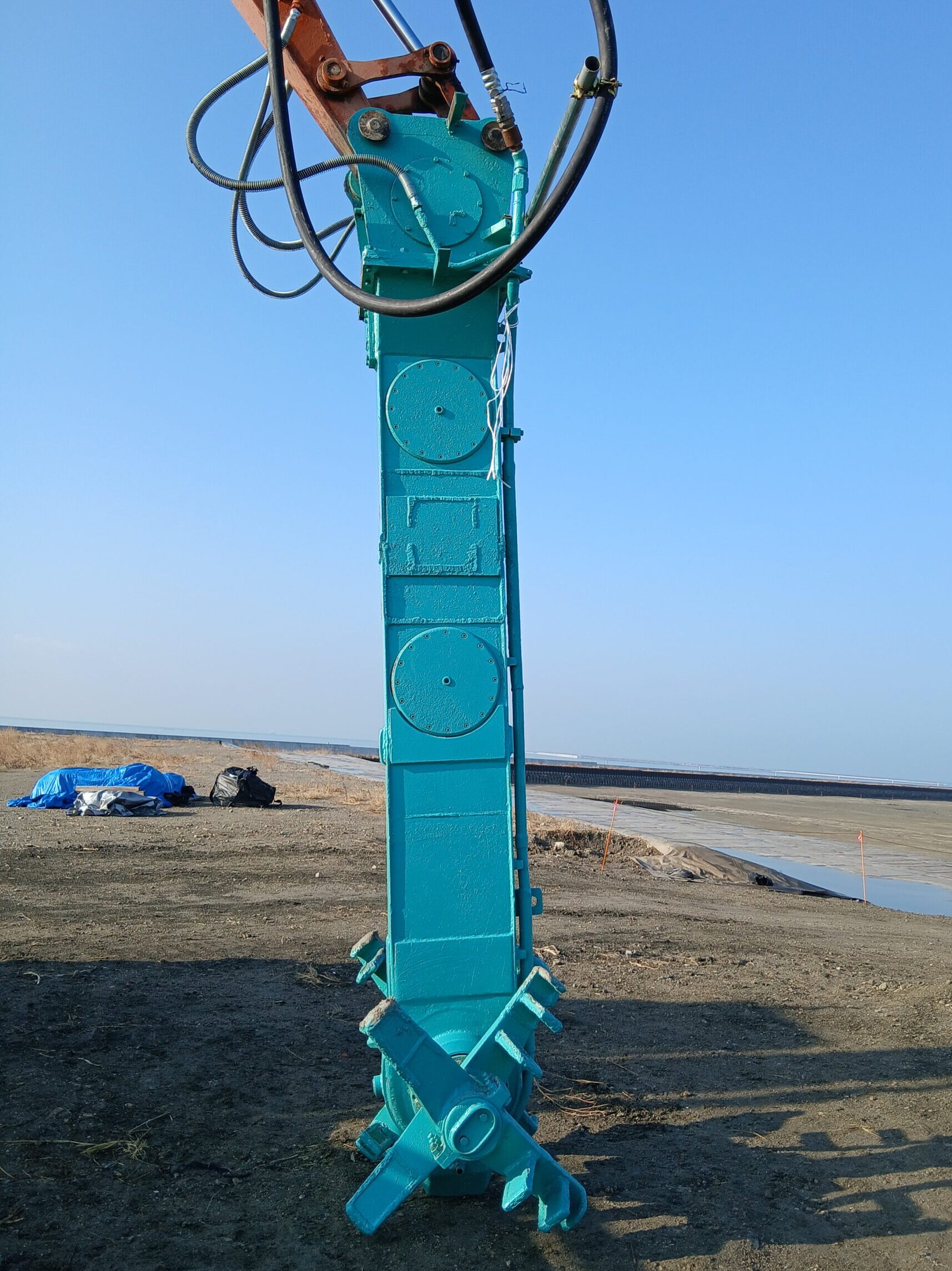
Overview
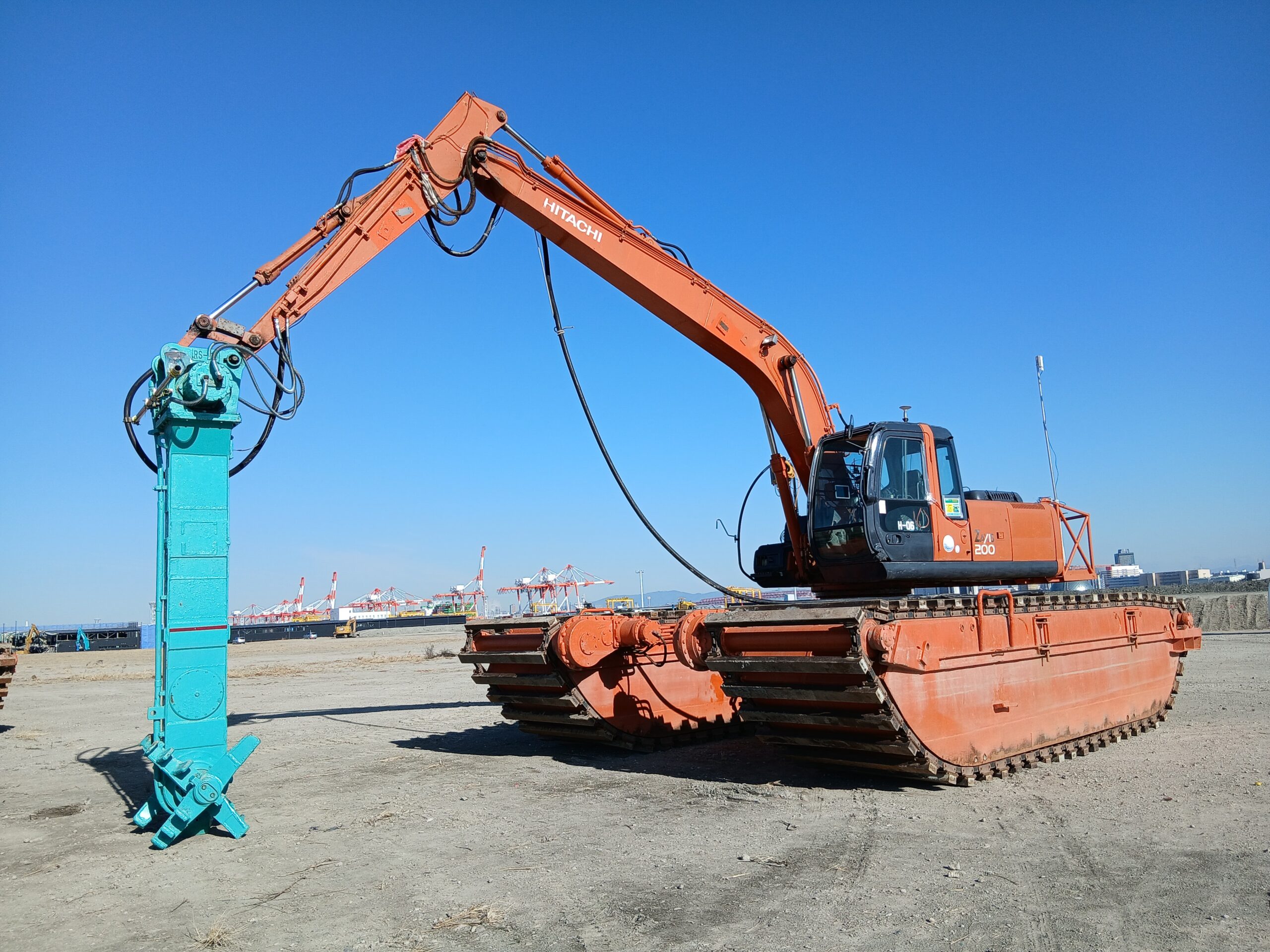
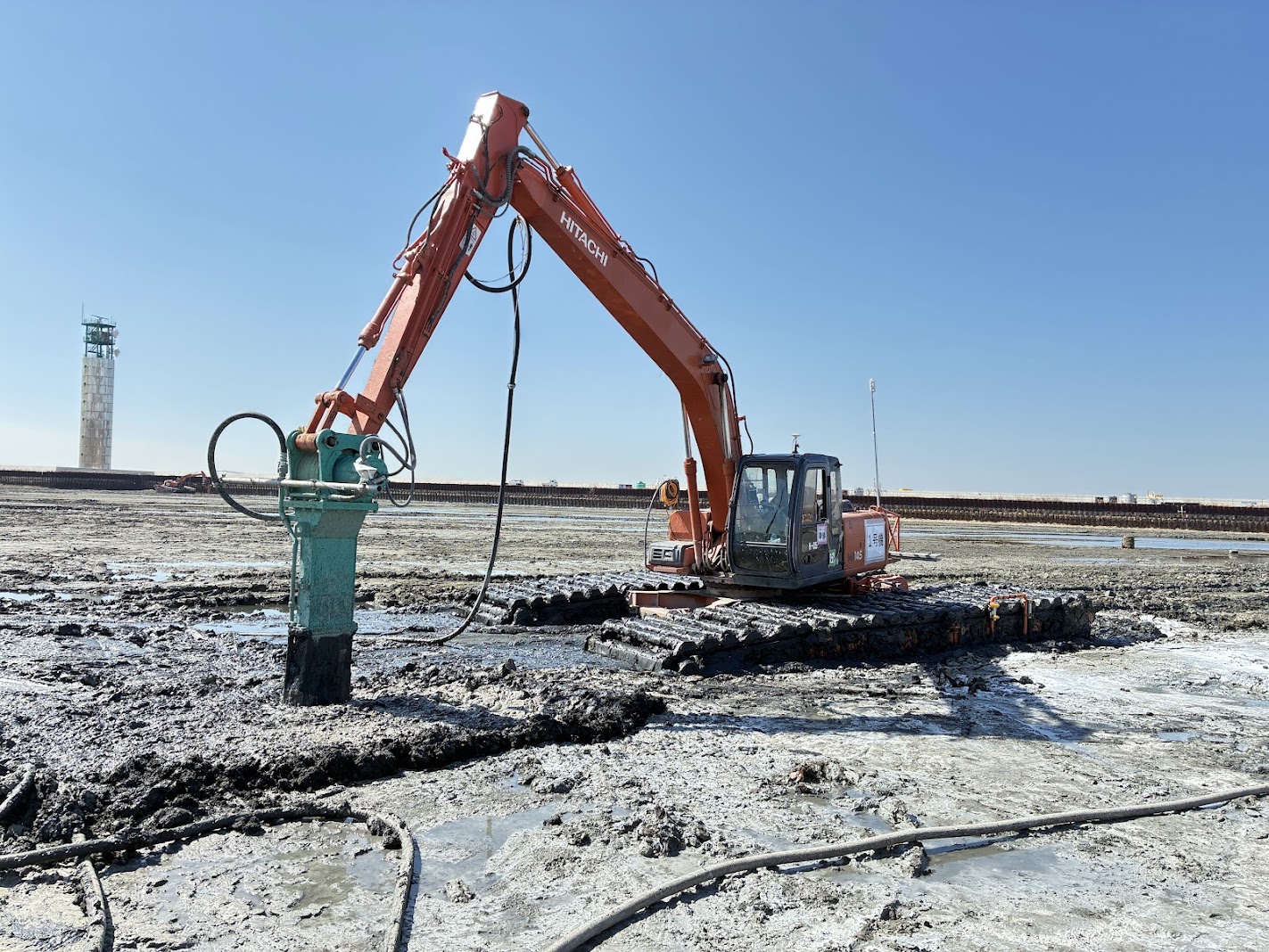
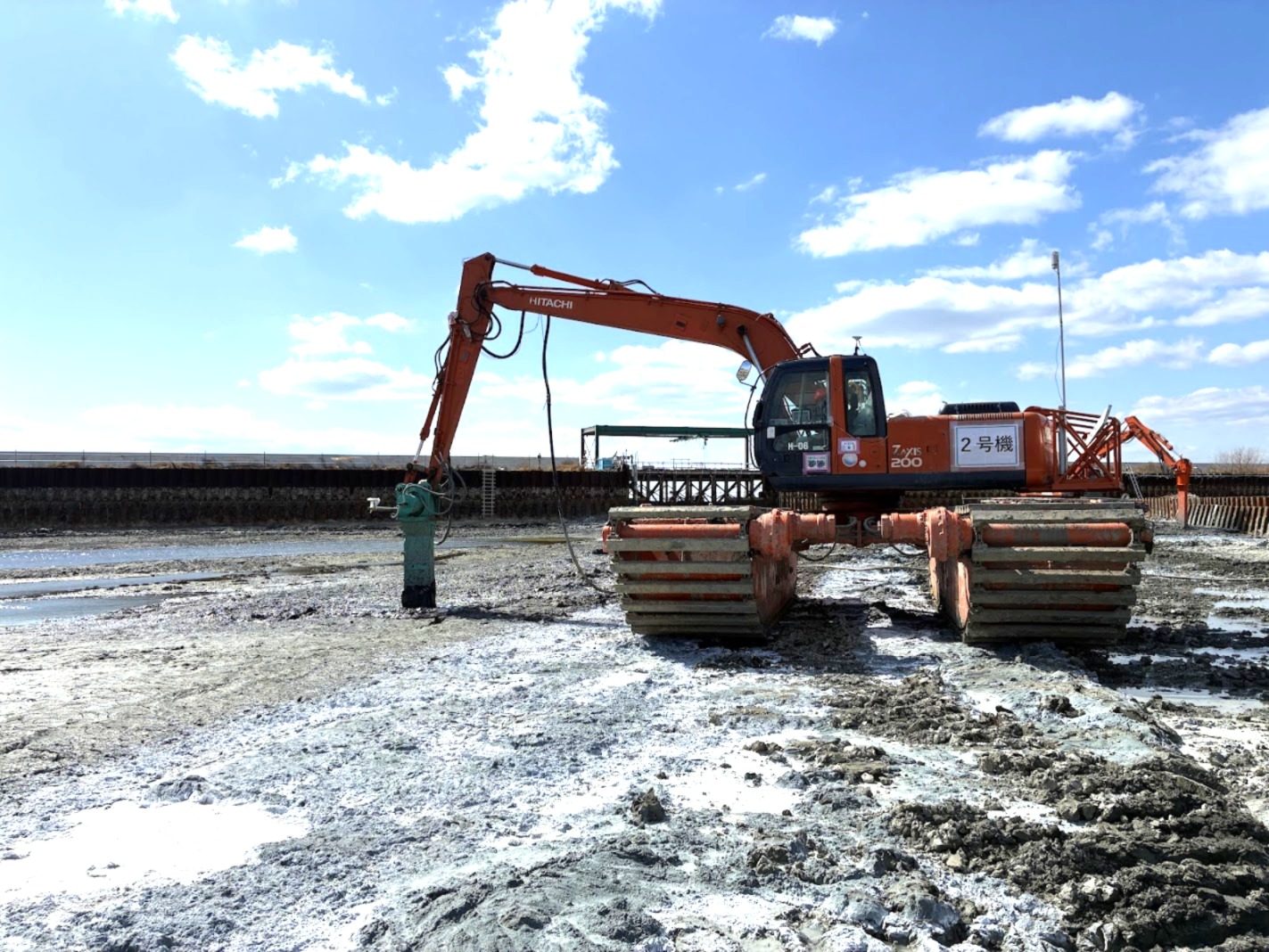
RM (Rotary Mixing) Method is a technology to solidify soft ground to attain a specified strength by injecting cement slurry at in-situ layer, and mixing and kneading them by means of rotary mixing blades. This technology is positioned as one of surface and medium depth soil improvement method for ultra soft ground which depth of improvement is less than 3 m, and for soft ground which depth of improvement is less than 10 m.
Features
- Smooth operation on ultra soft groundOperation on ultra soft ground is carried out by operation system by means of a specially designed amphibian mud vehicle.
- Operation with high mobility on soft groundWhen site access and working platform conditions are favorable, a crawler-type configuration can also be applied.
- Treatment PatternsDepth Treatment Patterns
・Full-depth treatment
・Surface treatment
Plan Treatment Patterns
・Full-area treatment
・Grid-pattern treatment
・Strip-pattern treatment - Reliability for obtaining a certain strengthSince blending quantity of solidification material for cement slurry can be adjusted based on target soil condition, a specified strength can be certainly obtained.