
Civil Engineering Works Business method02 Cast-in-Place Pile Construction
Our in-house manufactured cast-in-place piling machines
can handle all construction conditions.
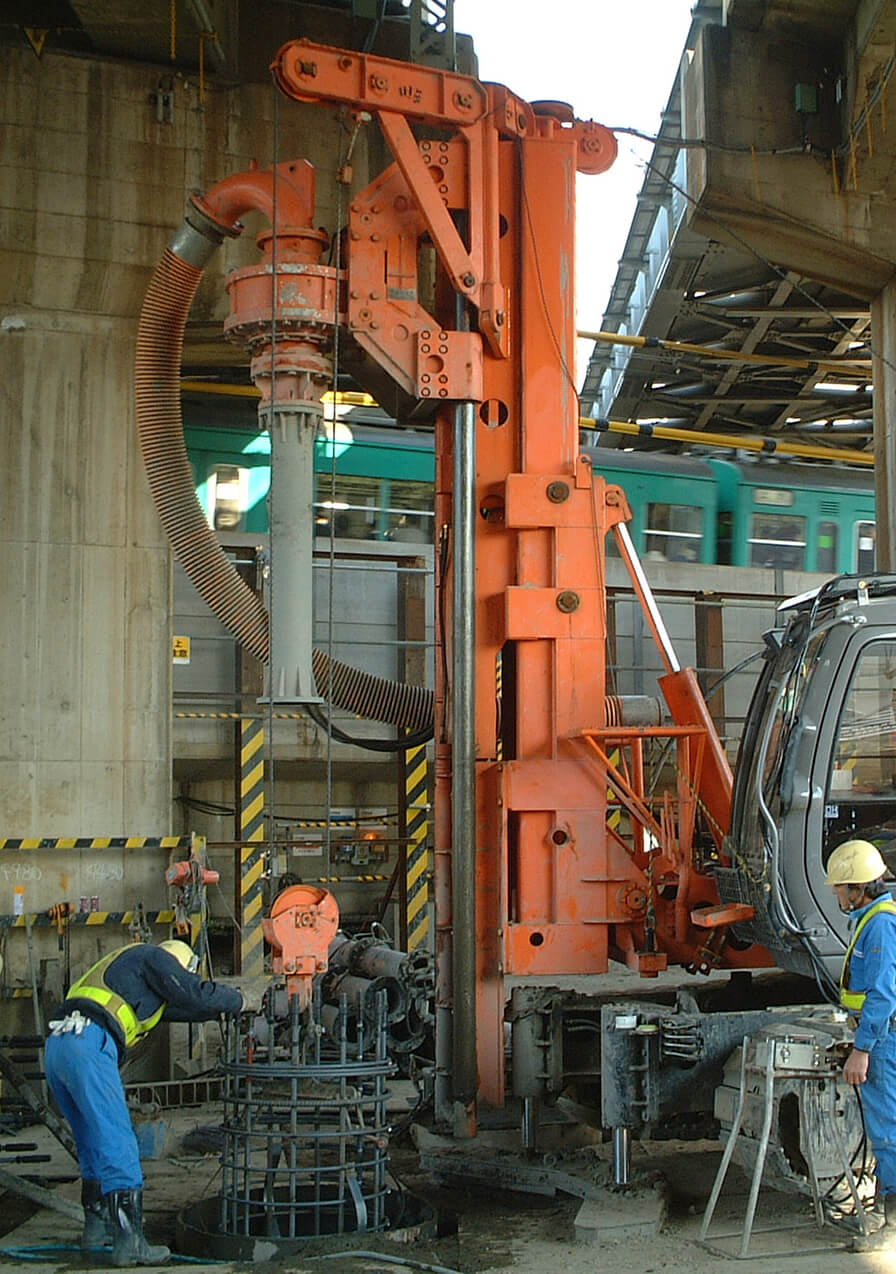
Cast-in-place piling is a type of essential foundation work for safely constructing stable structures on soft ground, performed to ensure adequate bearing capacity for new structures.
Toa-Tone Boring offers five methods: “JET-18 Method, TBH Method, MPD-TBH Method, BH Method, and All-Casing Method.” Our in-house developed and manufactured specialized machinery enables excavation in all types of ground. Furthermore, our lightweight, self-propelled, and low-headroom machines flexibly adapt to various construction environments, achieving shorter construction periods and reduced costs.
JET-18 Method
Utilization of a new lightweight and compact machine designed for operation under ultra-low headroom in restricted space such as railway platforms.
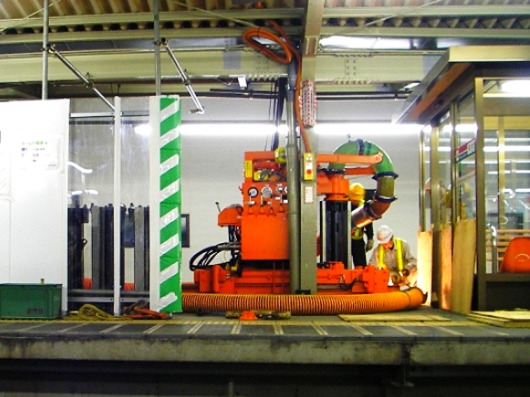
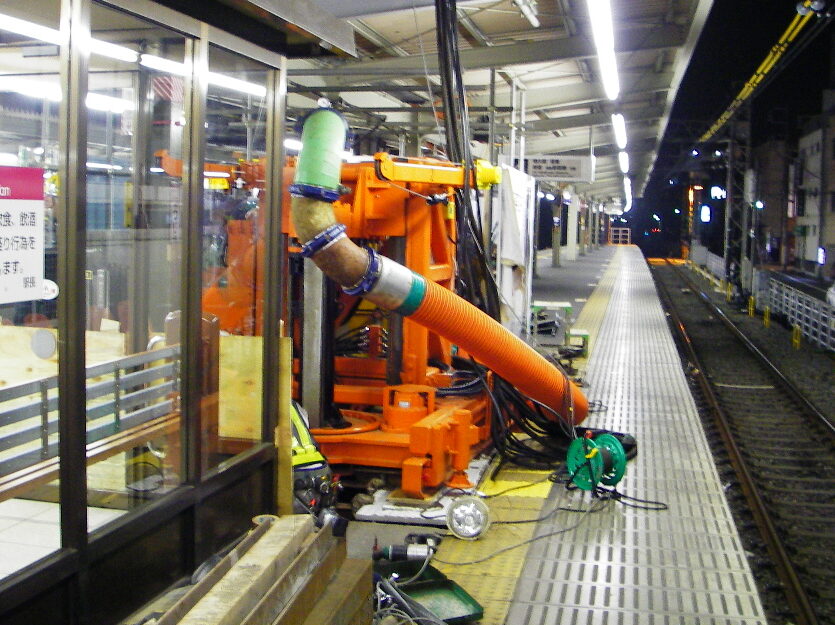
Overview
Piling works to construct the structures over the railway are allowed at nighttime only which suspends the train service to secure the safety of train services and passengers. The severe restriction of daily working time causes the lengthening of construction period and increase of construction cost.
JET-18 Method enables to shorten construction period and decrease the cost since continuous work is possible at the restricted working spaces such as under-platform of railway station, under-bridge or inside the building.
This technology is developed in association with East Japan Railway Company, Tekken Corporation and Toa-Tone Boring Co., Ltd.
Features
- Operation under super low headroomThe machine with 1.8 m height (1.0 m rod handling) can be operated smoothly under super low headroom.
- Drilling large hole diameterDespite its compactness, the machine can drill with the diameter up to max. 3.0 m.
- Smooth mobilization in restricted spaceSince the machine is very compact and has the weight of approx. 4 ton, mobilization of the machine is smooth and the provision of temporary enclosure and scaffold can be relieved.
- Adoption of rotary table system different from conventional systemRotary table system enables the operation under super low headroom.
- Use of reverse circulation systemReverse circulation system has a high reliability to obtain enough bearing capacity for structural objects.
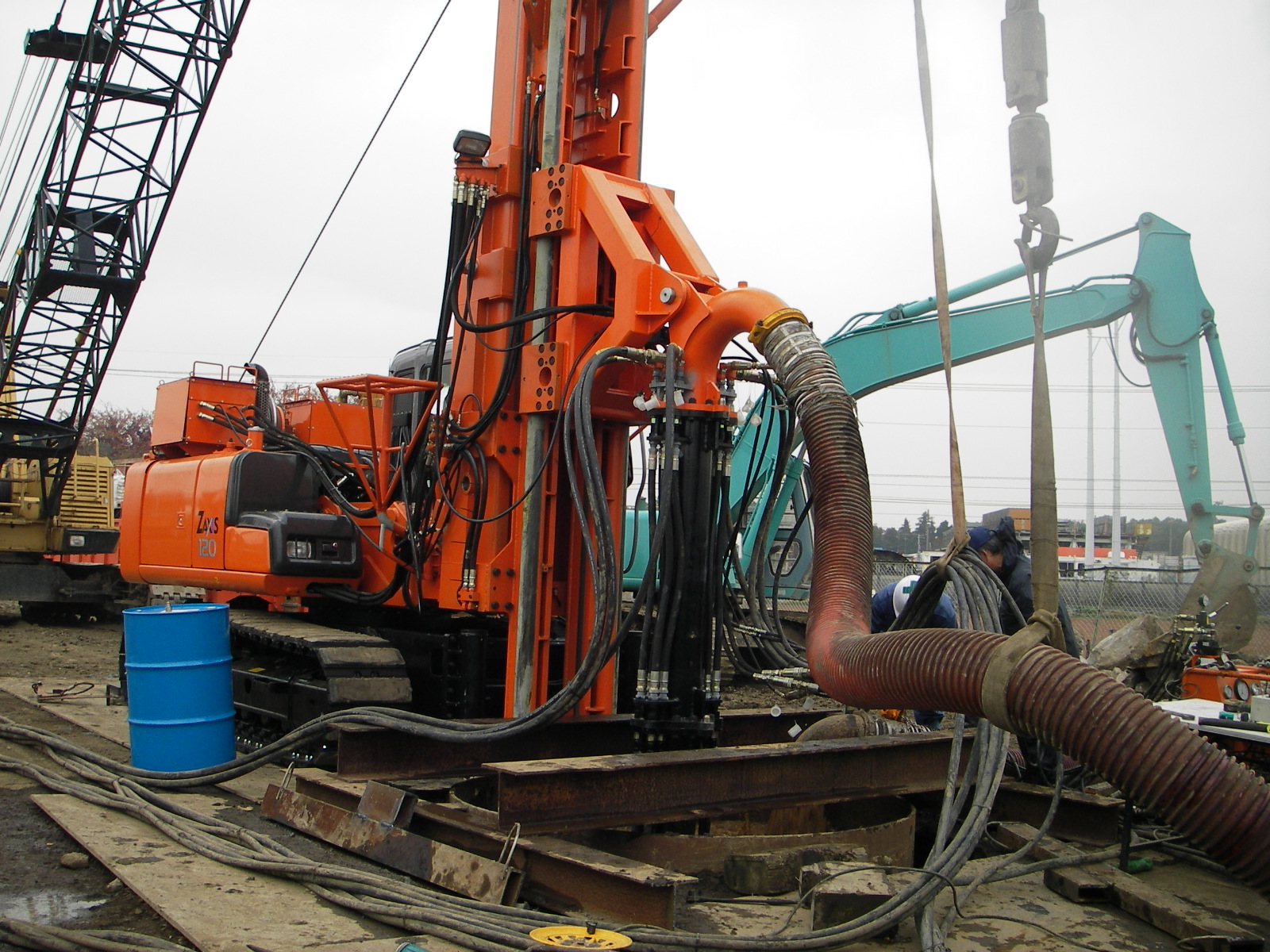
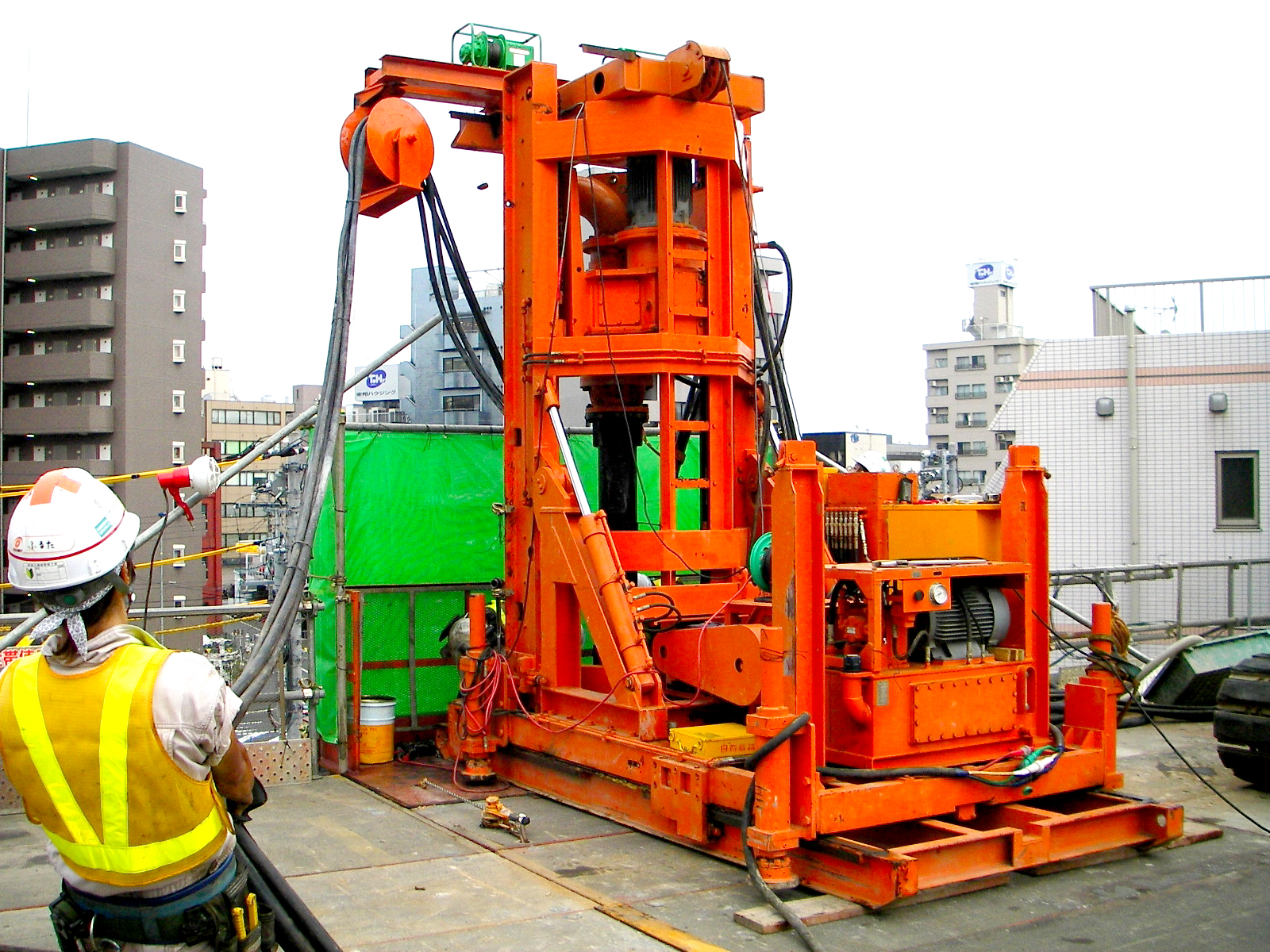
DHB Method
Utilization of drill enabling drilling work at elevated place and securing the safety at ground surface.
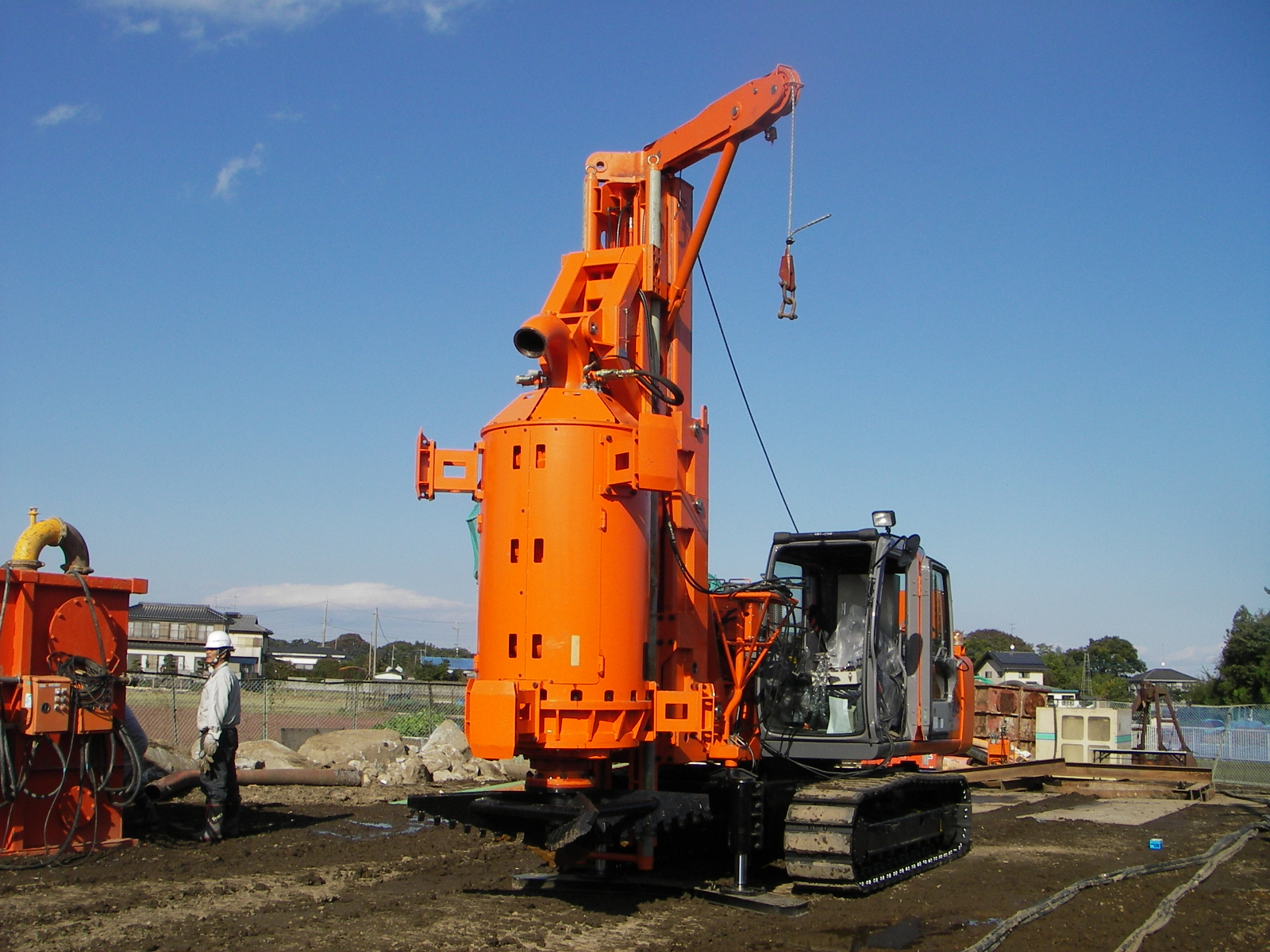
Overview
Piling works to construct the structures close to the railway are allowed in night time only which suspends the train service to secure the safety of train services and passengers. The severe restriction of daily working time causes the lengthening of construction period and increase of construction cost.
"DHB(Down the Hole Bit)" method enables to shorten construction period and decrease the cost since continuous work is possible at the restricted working spaces such as under railway, under bridge, compared with "TBH" method.
This technology is developed in association with East Japan Railway Company and Toa-Tone Boring Co., Ltd.
Features
- High efficiency of drilling work from elevated placeBy installing submersible sand pump inside bit body, pumping head (elevation that pump can push up the fluid) is increased. Thus, drilling work can be carried out in job sites wherever drilling work from elevated place is required.
- Improvement of working safety on the groundSince submersible sand pump is installed inside bit body, suction pump is not required so that working safety on the ground is improved.
- Installation of boulder crushing mechanismBoulder crushing mechanism located at reverse inlet ensures efficient excavation by preventing the choking in reverse line.
- Choice of base machine meeting job site conditionTwo types of base machine, skid mounted or crawler mounted, can be selected according to job site condition.
- Use of reverse circulation systemReverse circulation system has a high reliability to obtain enough bearing capacity for structural objects.
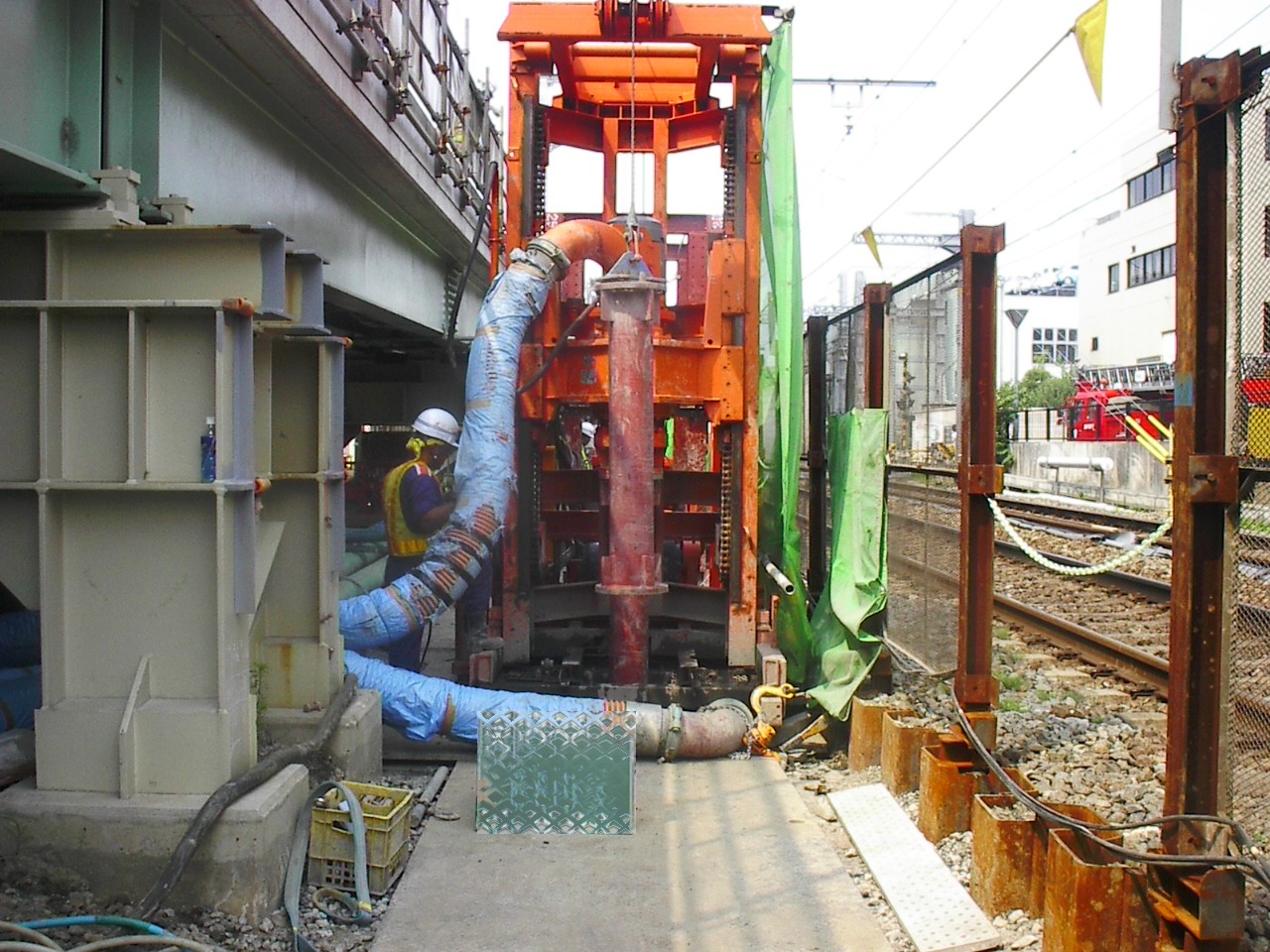
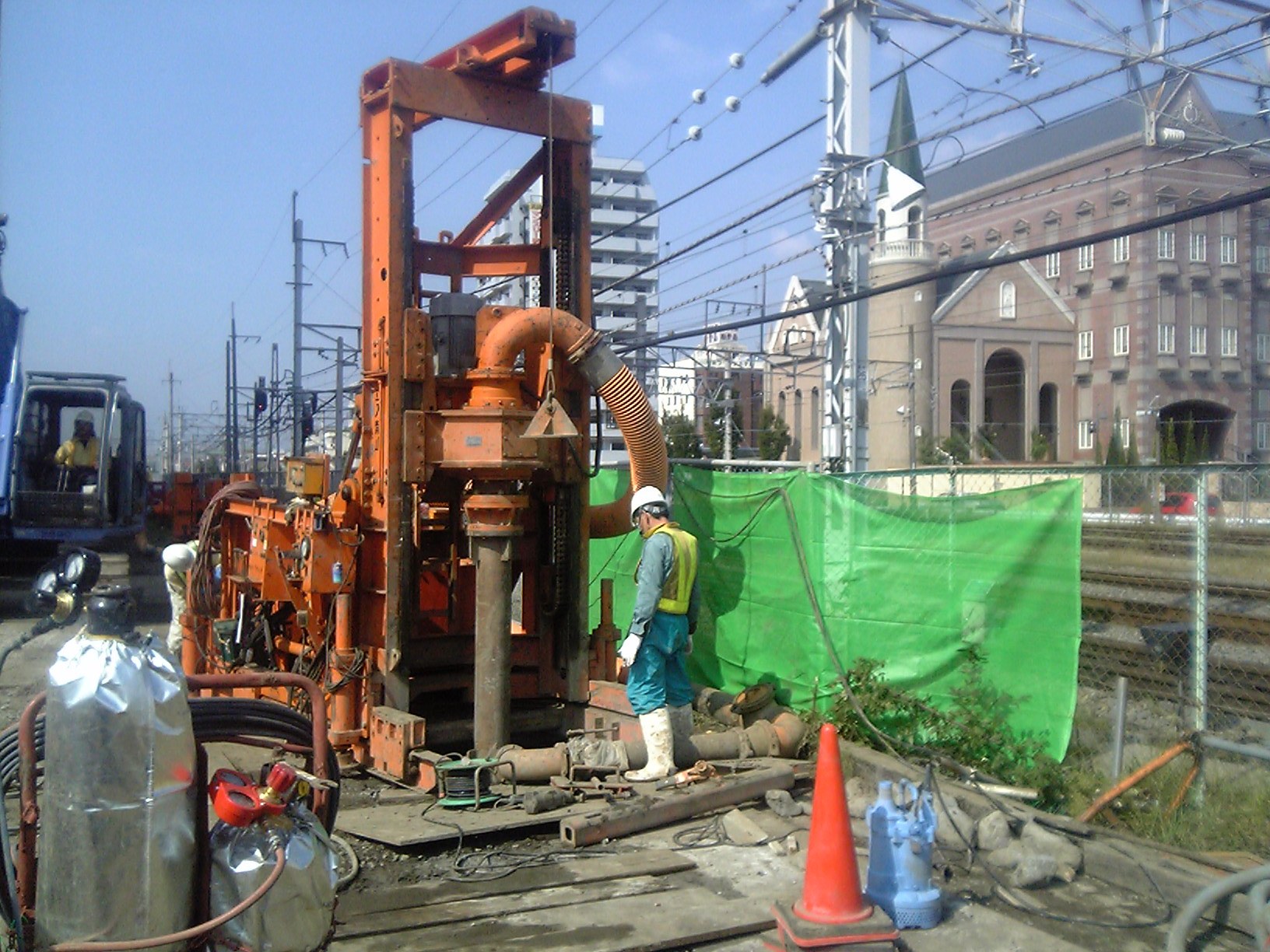
TBH Method
Utilization of drill applying reverse circulation system.
Overview
TBH(Tone Boring Hole)Method is utilized as a standard drilling method for cast-in-place pile construction and TBH drill has reverse circulation system and top drive type mechanism.
Compared with BH method utilizing direct circulation system and spindle type mechanism, TBH method has an advantage for larger diameter drilling to construct permanent pile.
Features
- Adoption of reverse circulation systemBecause of the prompt removal of cuttings from hole bottom, reverse circulation system can obtain a proper bearing capacity for structural object and enables the operation under low noise and low vibration for environmental conservation to the neighboring.
- Drilling for harder layerThe trochoid bit performs efficiently for gravel layer and harder layer can be displayed.
- Compactness suitable for working at restricted spaceThe use of compact and light weight drill actualizes the smooth operation at restricted space.
- Drilling larger hole diameterDespite its compactness, the machine can drill with the diameter up to 2.0 m.
MPD-TBH Method
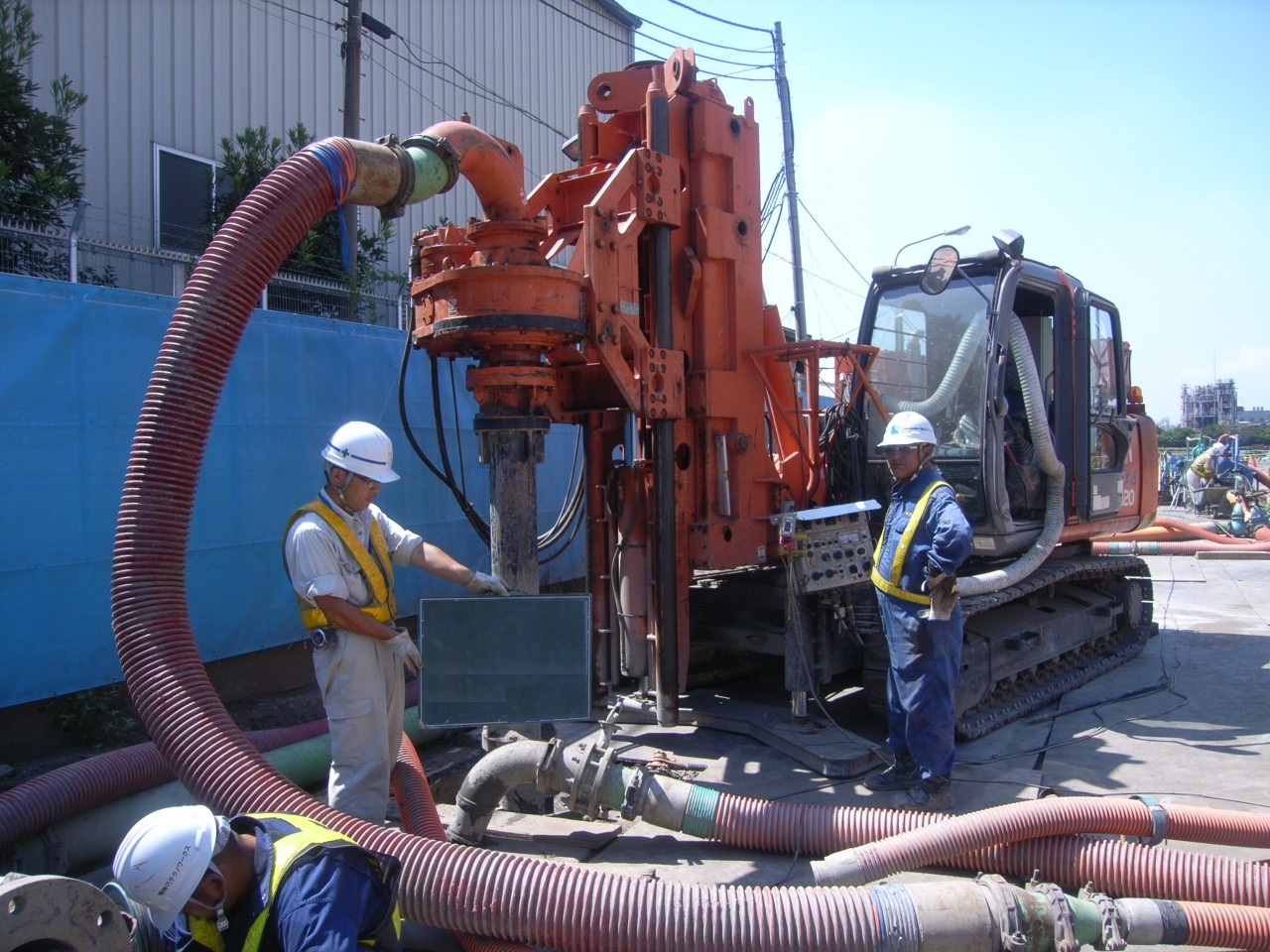
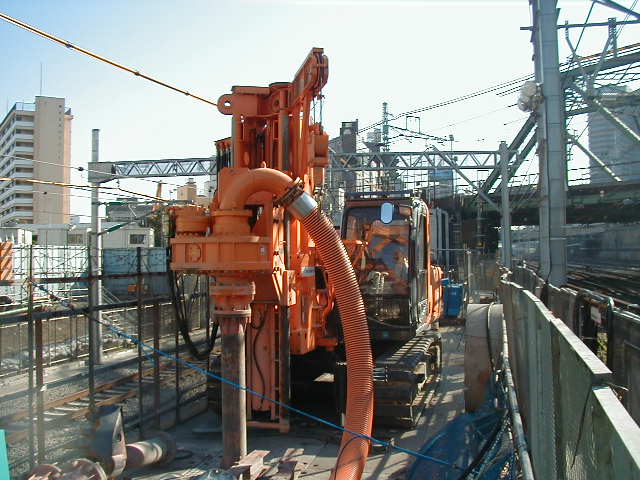
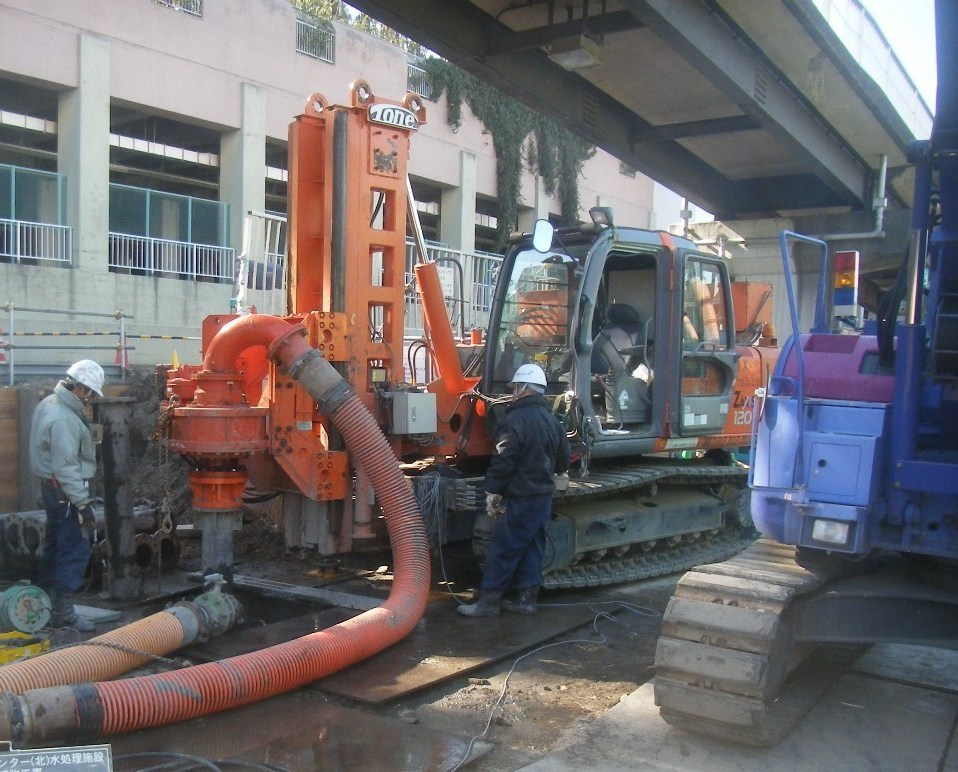
Utilization of drill with telescopic type extendable leader to enable smooth drilling under low headroom space.
Overview
MPD-TBH Method is one of TBH method and has advantages as better mobility and more efficient operation at job site with height limit. The machine has reverse circulation system and top drive type mechanism and has an advantage for larger diameter drilling to construct parmanent pile compared with BH method.
Features
- Drill suitable for operation under low headroomDrill with telescopic type leader enables the smooth operation under low headroom.
- High drilling efficiencyHydraulic top drive mechanism ensures high working efficiency.
- High mobility at restricted spaceCompact and self-propelled type base machine improves its mobility.
- Adoption of reverse circulation systemBecause of the prompt removal of cuttings from hole bottom, reverse circulation system can obtain a proper bearing capacity for structural object and enables the operation under low noise and low vibration for environmental conservation to the neighboring.
- Drilling for harder layerBy means of trocho bit, efficient drilling for gravel layer and harder layer can be displayed.
- Drilling larger hole diameterDespite its compactness, the machine can drill with the diameter upto max. 2,500 mm.
BH Method
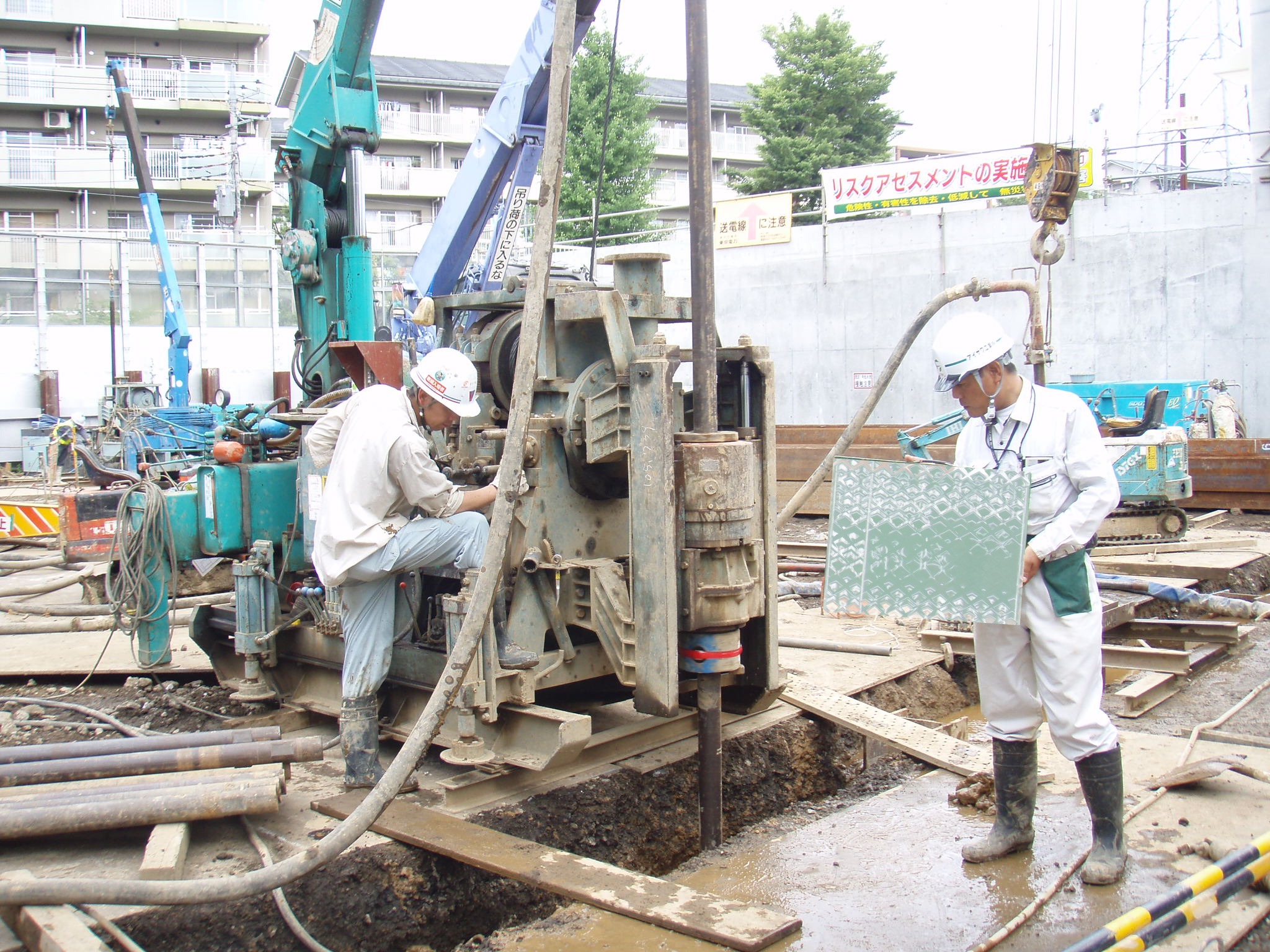
Utilization of spindle type drill applying direct circulation system
Overview
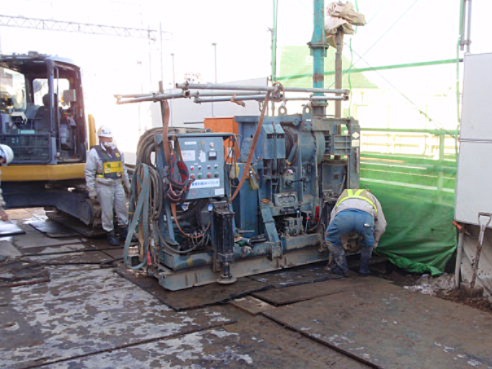
BH (Boring Hole) Method is a standard drilling method applied to cast-in-place pile construction as well as TBH method. This method is carried out by means of spindle type drill with 18.5 kW horse power and rotation of wing bit installed at the low end of drill rods.
Drilling is continued by circulating stabilizing solution from drilling pump to wing bit and cuttings removed by returning flow of circulation fluid to ground surface are pumped up by submersible sand pump and filtered circulation fluid is re-circulated specified as direct circulation system.
Features
- Use of direct circulation systemMud plant of direct circulation system is more simple than that of reverse circulation system. However, there is still a problem for the smooth removal of cuttings along with circulation fluid and the cleaning of cuttings on hole bottom.
- Drilling for rocky formationDrilling for rocky formation is possible by means of tricone bit.
- Compactness suitable for operation at restricted spaceThe drill is the most compact among the drills to be used for cast-in-place pile construction.
This feature enables the operation at very restricted space and makes transportation and setting up of the drill easier - Application to various piling worksThis method can be applied to pilings with steel pipes, H-beams, multi-column, inclined angle, etc.
Full Rotation All Casing Method
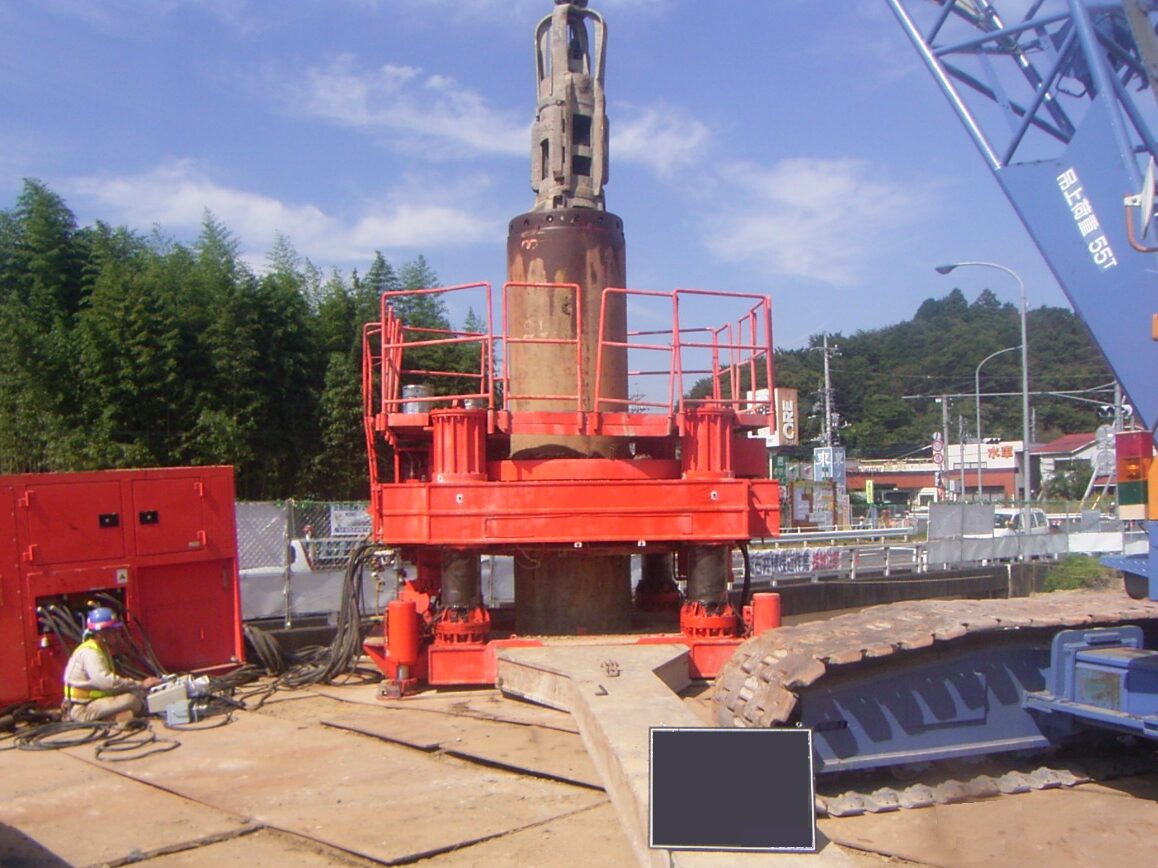
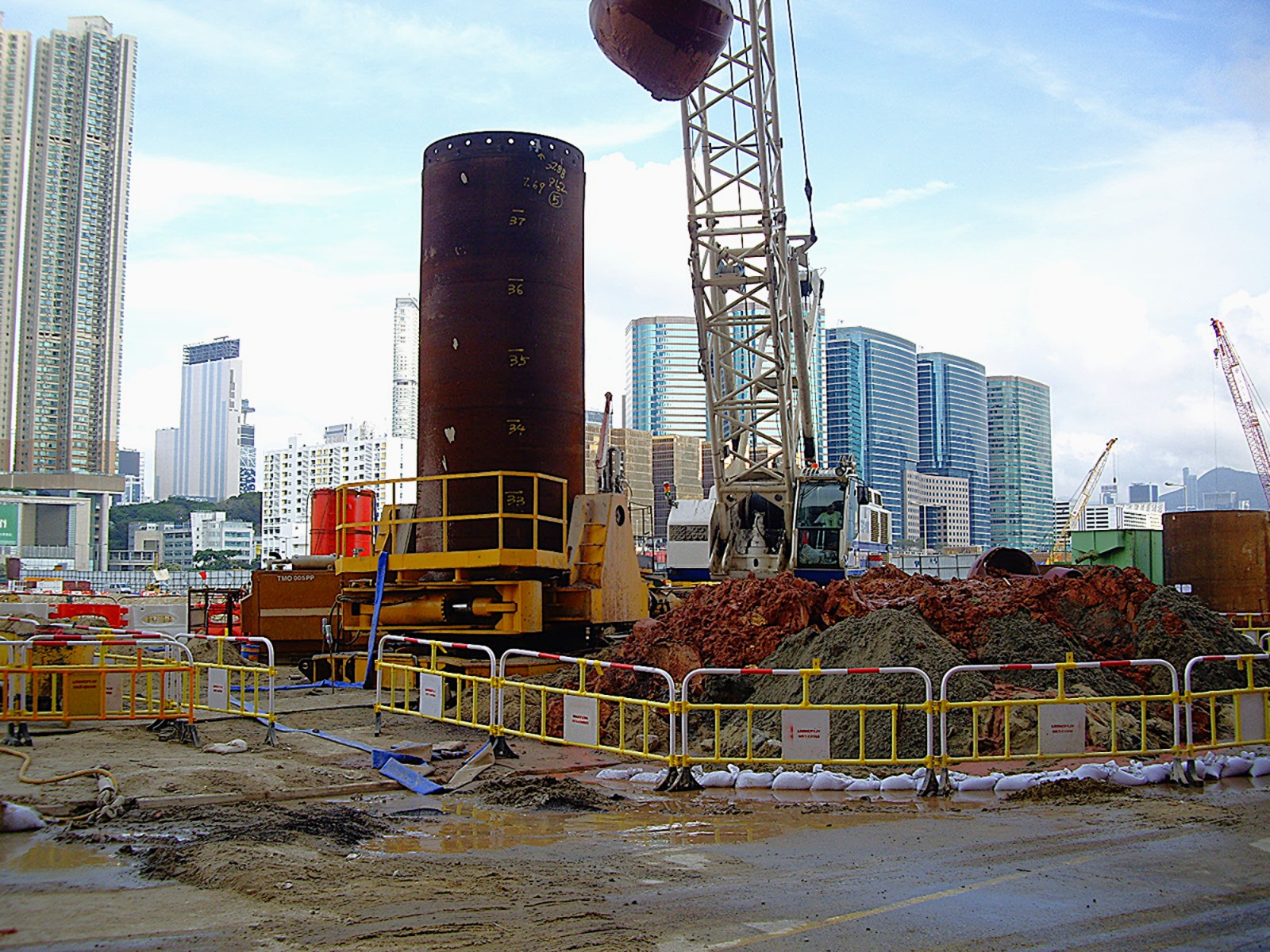
Utilization of rotary casing jacking machine to install the casing for full length of the hole.
Overview
The casing rotation method is a construction technique in which a casing tube is rotated and pressed into the ground with high torque over the entire length of the borehole, while excavation is performed using a hammer grab.
After completion of excavation, bottom cleaning is carried out, followed by installation of the reinforcement cage. Concrete is then placed using a tremie pipe.
During concrete placement, the casing tube is simultaneously withdrawn and recovered.
Features
- High drilling efficiency disregarding type of ground formationEfficient drilling through existing reinforced concrete piles or pine piles is possible as well as drilling through gravel layer and rocky formation.
- Stability of neighboring ground formationDrilling with the use of casings keeps the effect to neighboring ground formation minimal.
- High drilling accuracyDrilling with the use of casings with high rigidity enables the finishing with high verticality.