
Civil Engineering Works Business method01 Diaphragm Wall Construction
Japan’s only Manufacturer of
“Rotary Multi-Horizontal Cutter Diaphragm Wall Trencher”
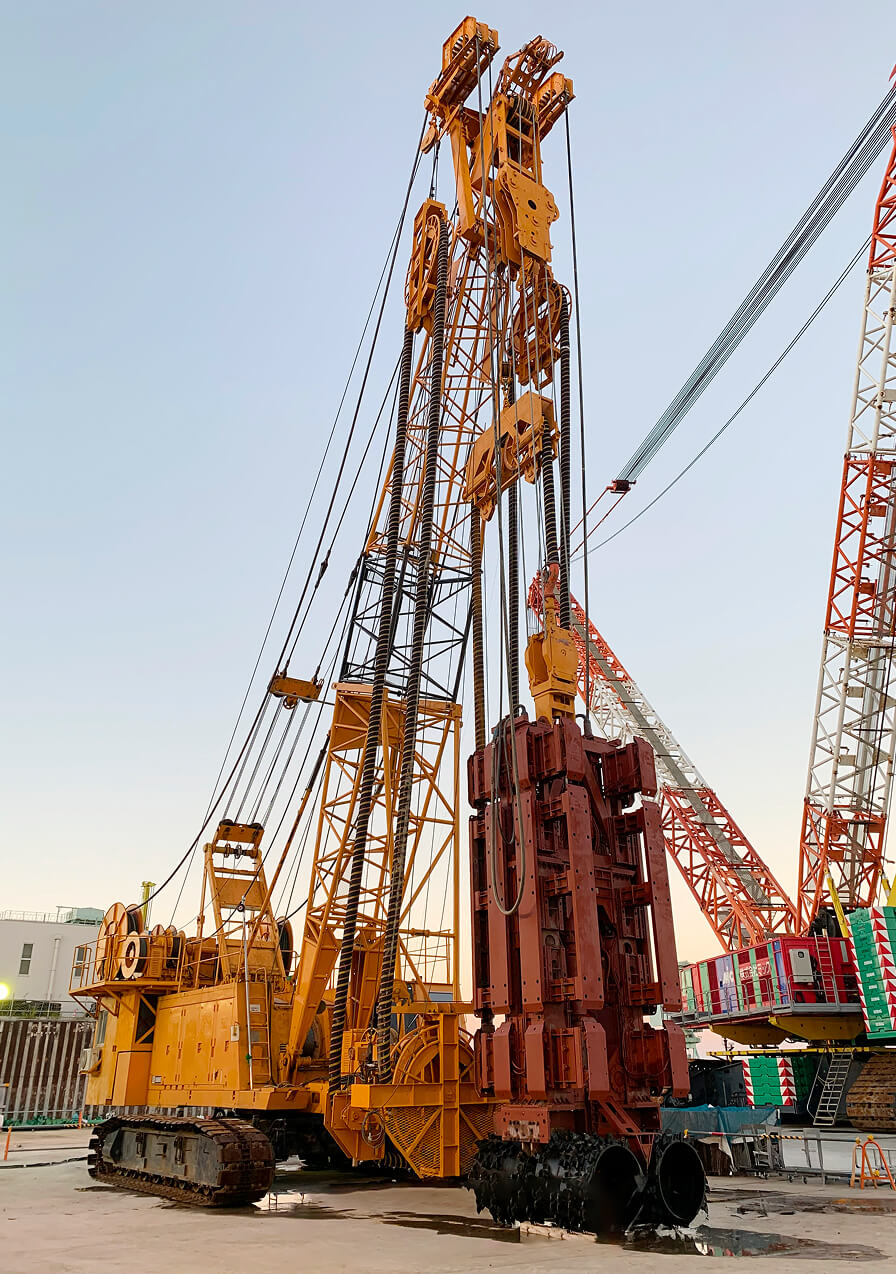
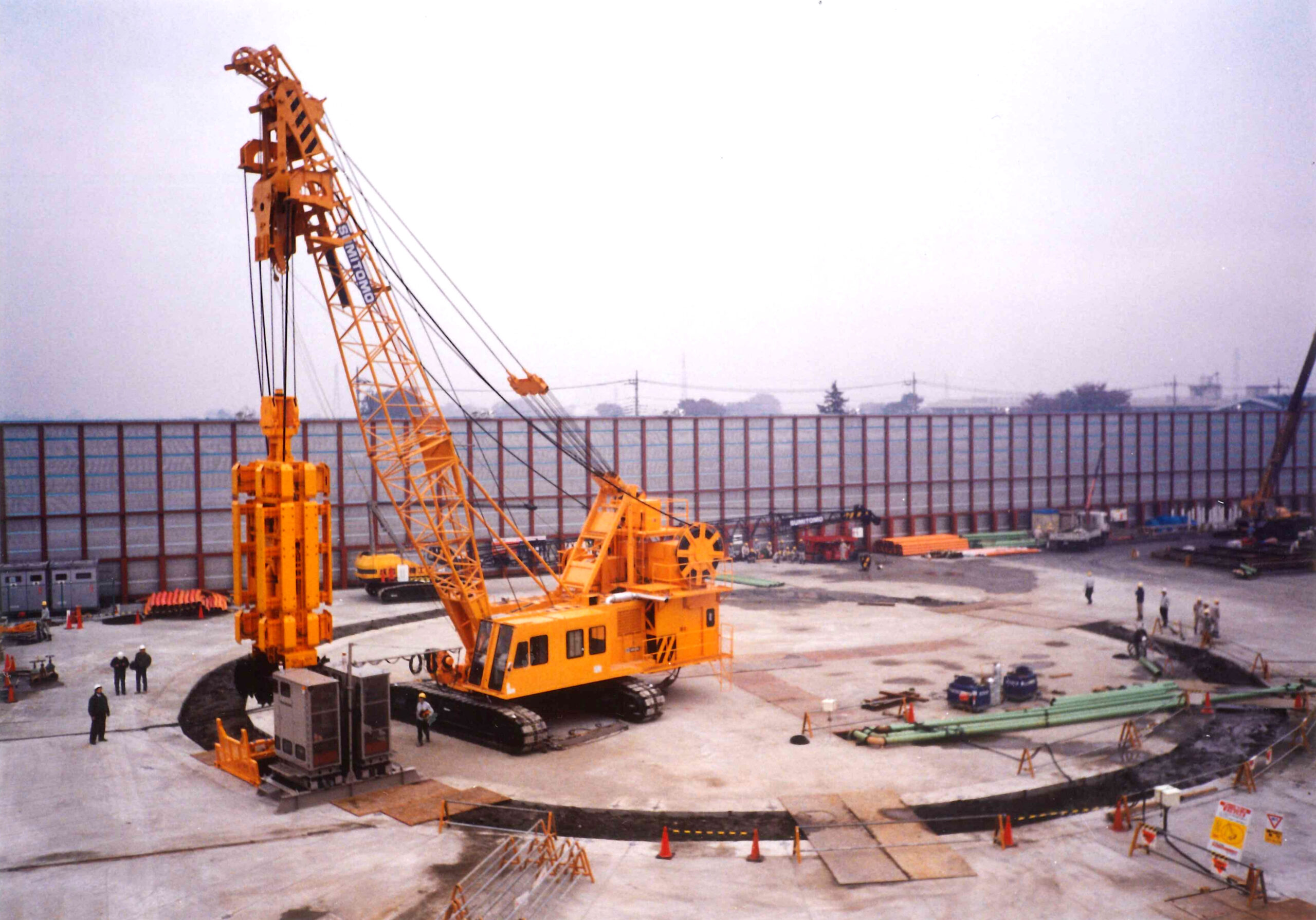
Diaphragm wall construction is a technique that involves excavating a wall-shaped trench underground while preventing the collapse of the trench face using stabilizing fluid, and constructing a continuous wall body in the ground. Diaphragm walls are categorized into cut-off walls, which use reinforced concrete as the wall body, and soil mixing column walls, which construct the wall body by in-situ mixing and stirring soil with multi-axis augers. In recent urban civil engineering projects, deep depths and thick walls are often required, and cut-off walls are generally applied because they can secure sufficient quality to serve as part of the main structure. The rotary multi-horizontal cutter diaphragm wall trencher is a representative excavator used for cut-off walls, demonstrating high cutting ability in any type of ground.
Toa-Tone Boring offers excavating machines compatible with three construction methods, ranging from large-scale machines to lightweight, compact models that enable smooth construction in confined spaces.
Features
Cut-Off Walls
Applicable Methods: “MPD-TMX Method,” “EMX Method,” and “CMX Method”
- Low noise and vibration during construction, making them suitable for most ground conditions.
- High rigidity and excellent water-sealing performance, minimizing impact on surrounding ground.
- High bearing capacity, allowing use as permanent structures.
- Machines are available that can handle wall thicknesses from 600 to 3,200 mm and excavation depths up to 150 m.
Applicable
Locations
- Temporary earth retaining walls
- Cut-off walls for underground tanks, basements, and joint utility tunnels
- Alternative foundations such as foundation piles and caissons
- Retaining walls, seawalls, and revetments
MPD-TMX Method
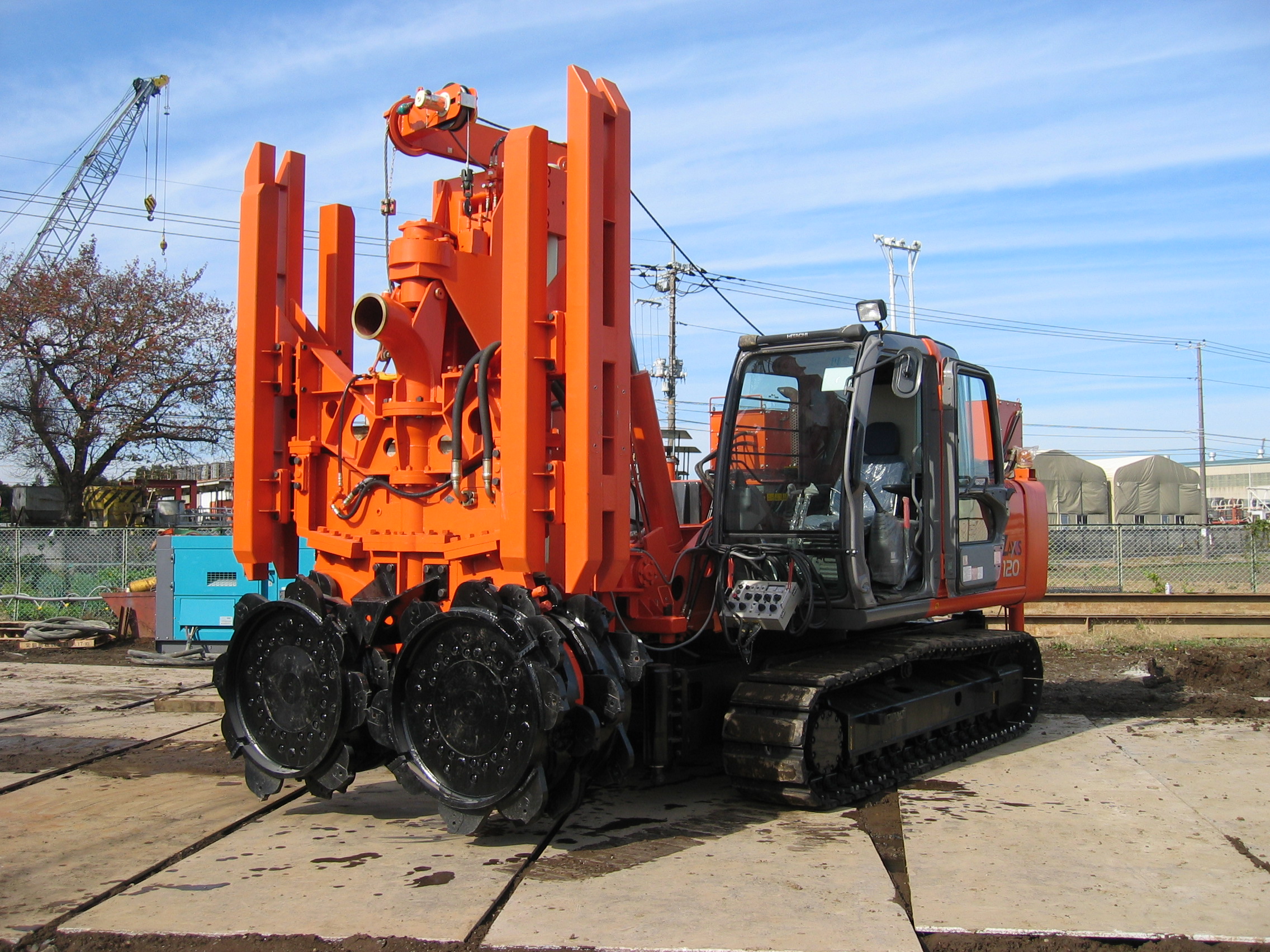
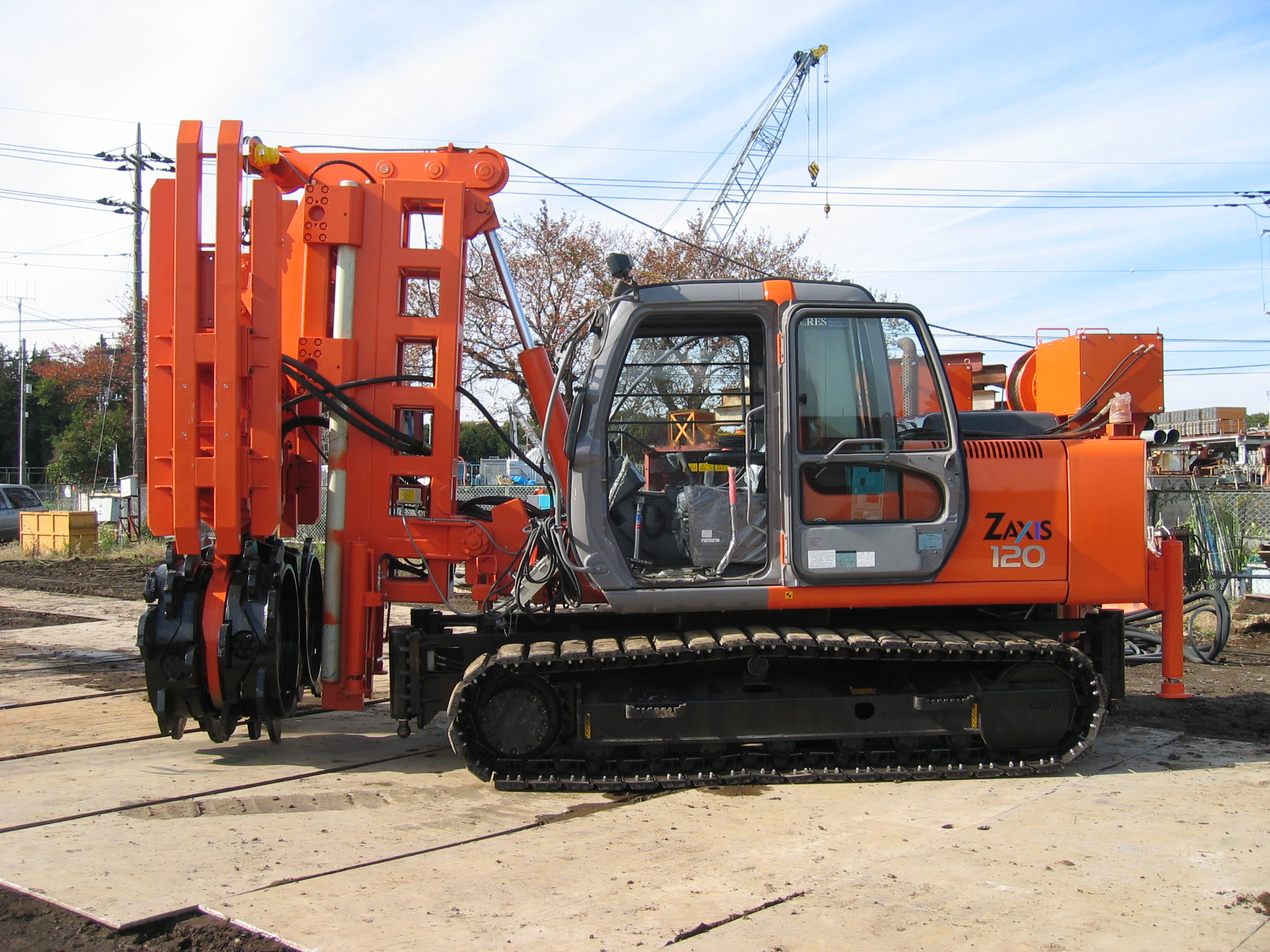
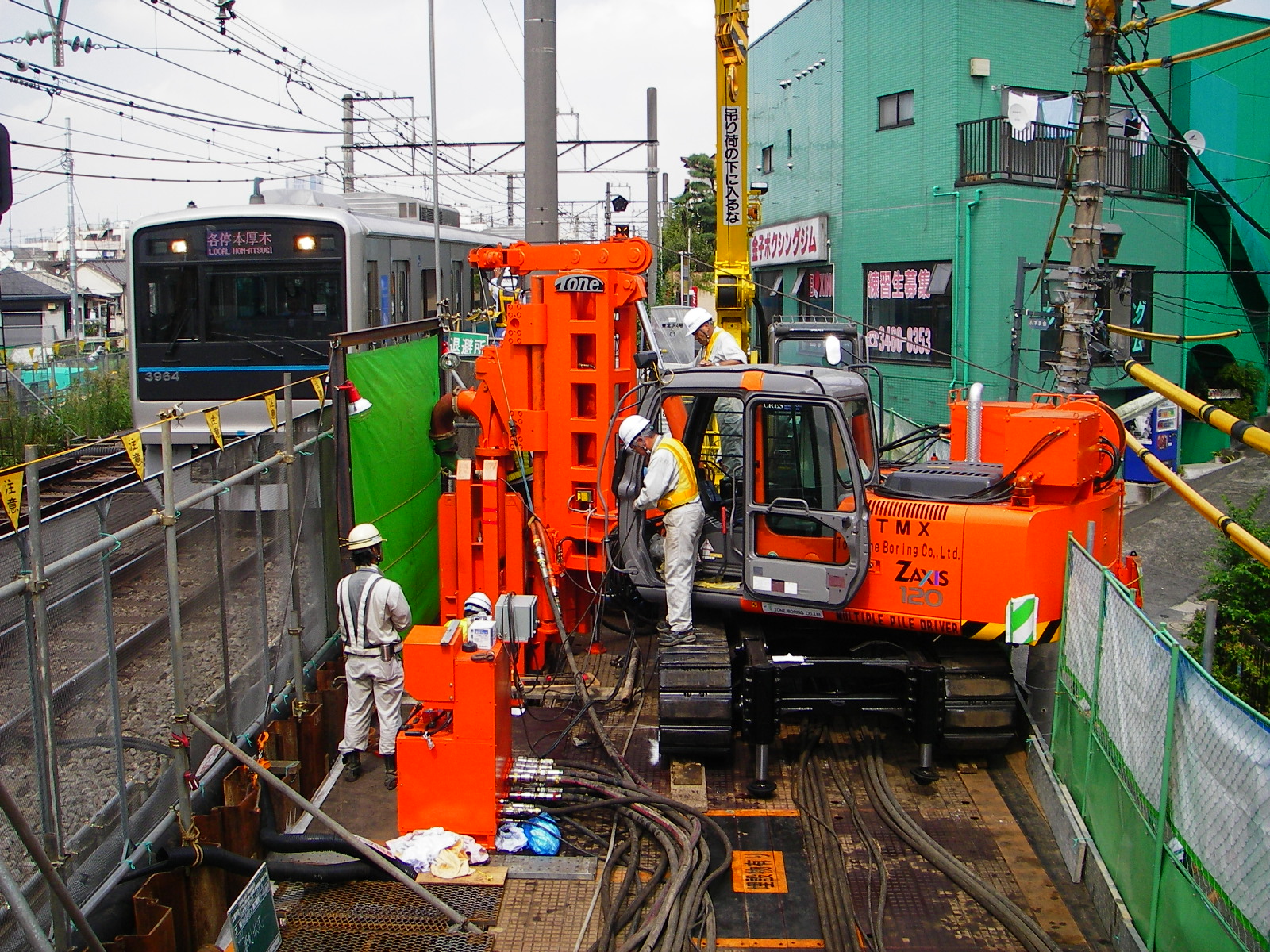
Utilization of a recent lightweight and compact diaphragm wall trencher desighed for operation in restricted space for urban civil engineering projects.
キャプションが入ります。
Features
- Rotary Drilling Method (Diaphragm Wall Construction Method)This method is to rotate cutters while circulating slurry, discharging the excavated soil together with the slurry during the excavation process.
- A compact base machine is used for the diaphragm wall rig to achieve space-saving operation.By applying MPD-45 and MPD-70 as base machines, construction work in confined spaces has been made possible.
Although this is a compact diaphragm wall rig, it is capable to handle wall lengths from 2,400 to 3,200 mm and wall thicknesses from 600 to 1,500 mm. - Full face cutting by unique cutting mechanismThis method ensures efficient excavation by eliminating uncut section.
- Save maintenanceA compact diaphragm wall trencher ensures to save maintenance works.
- Application to a variety of ground formationCan apply to a sticky formation, a stiff layer, gravel and boulder layer by the use of rotary multi-horizontal cutter.
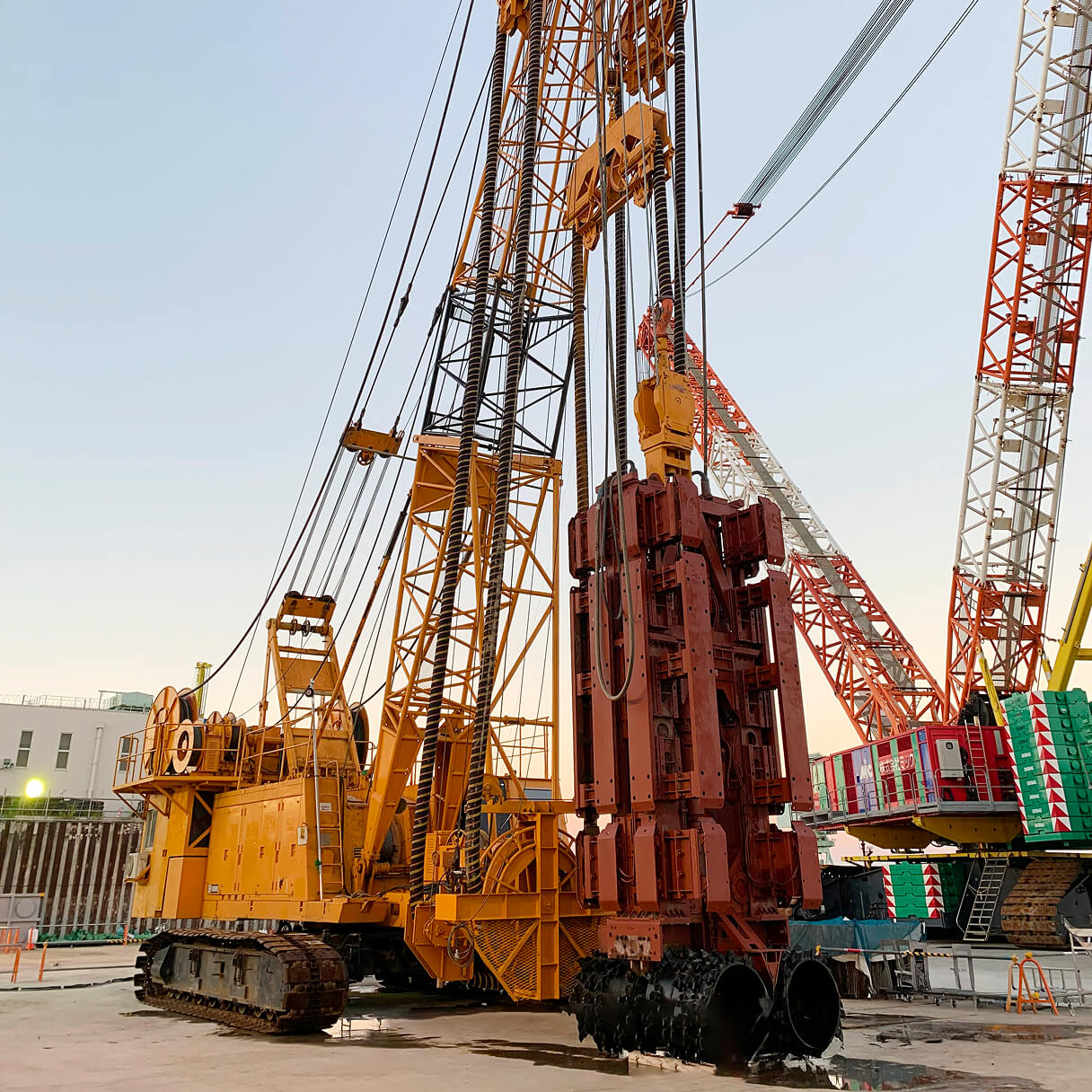
EMX (Diaphragm Wall Construction Method)
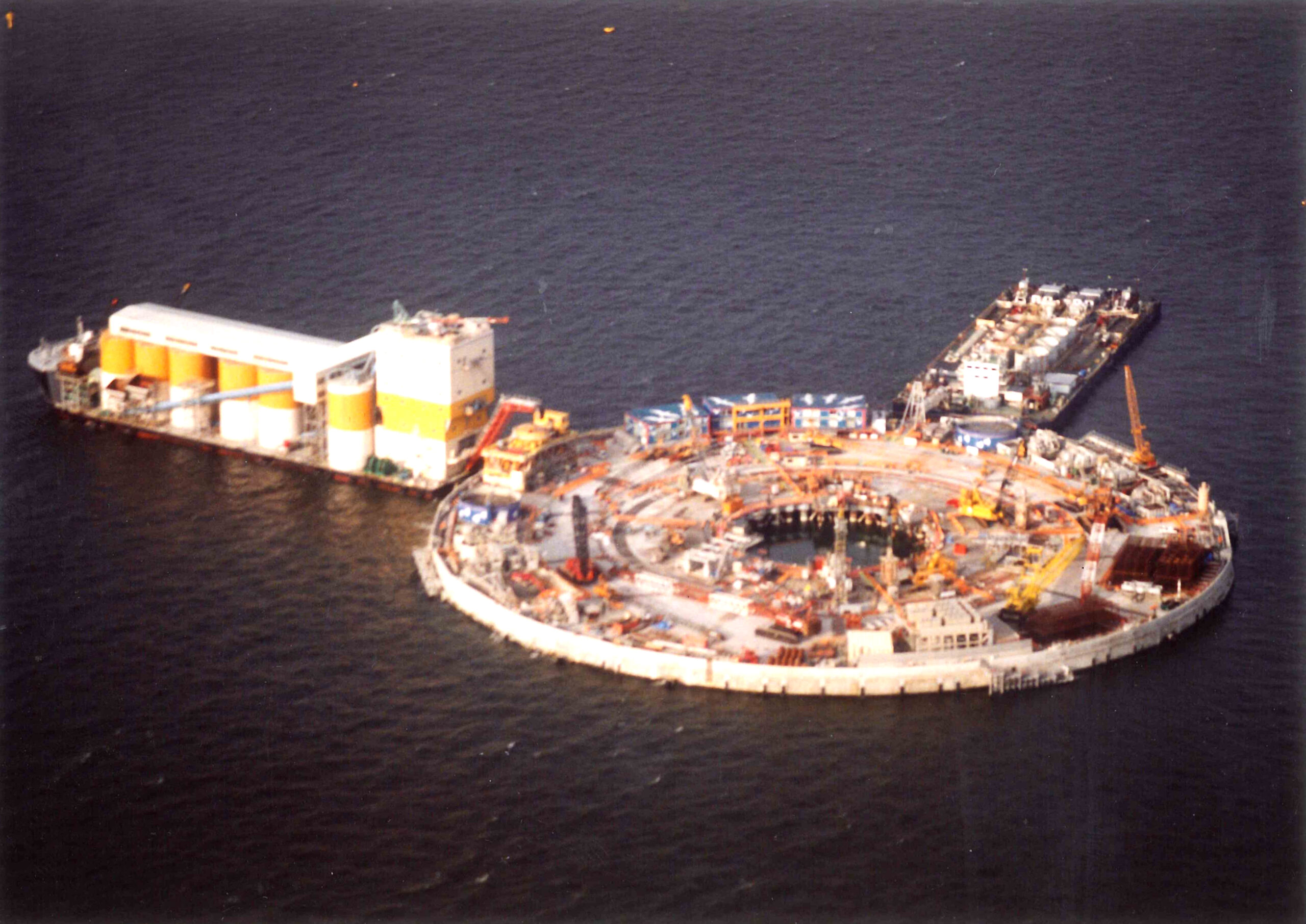
A diaphragm wall drilling system with a proven track record of adoption in large-scale urban civil engineering projects
キャプションが入ります。
Features
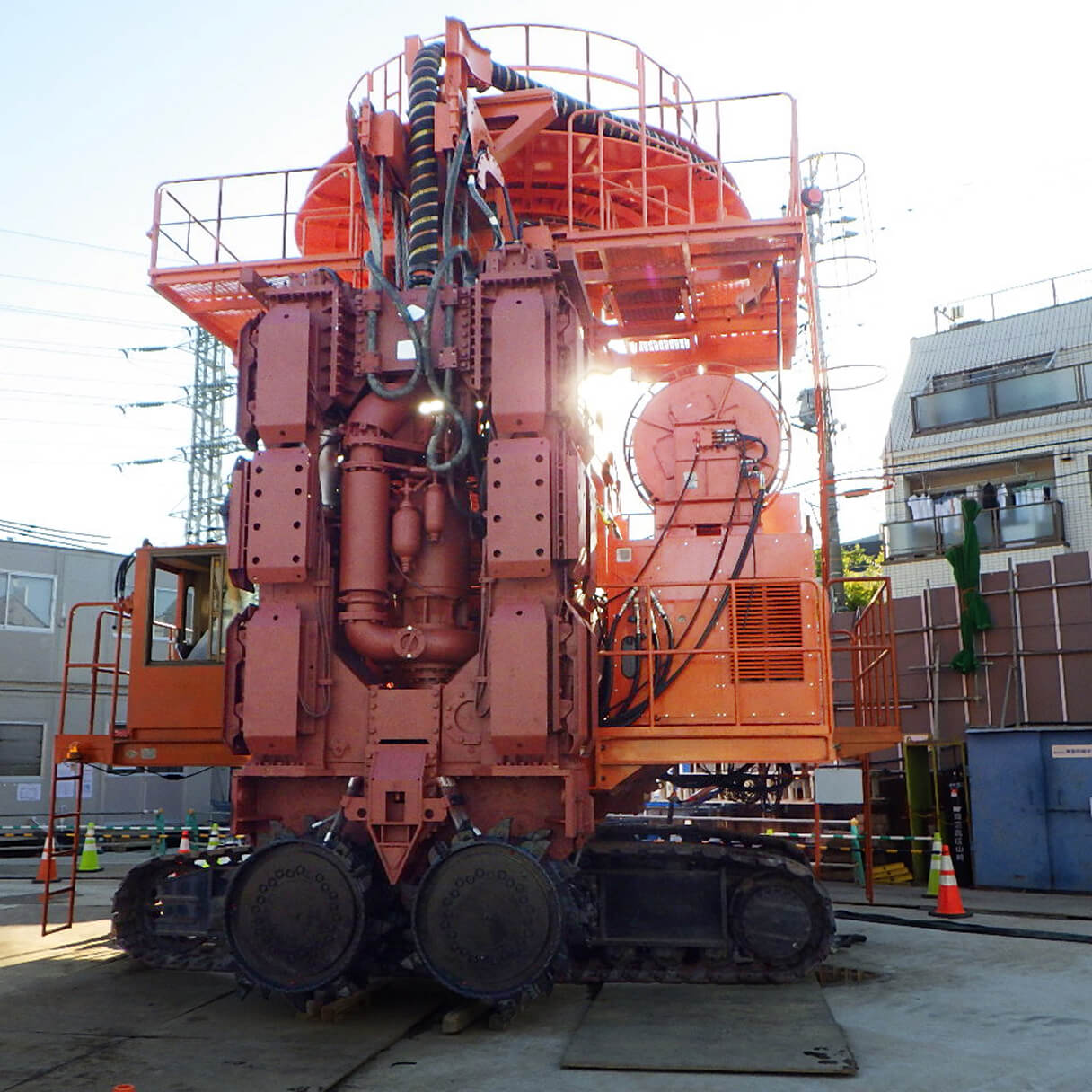
- The main drum and ring cutter mechanism enable smooth drilling operations without leaving unexcavated areas during excavation.
- The ring cutter is capable to crush large gravel, reducing the risk of suction inlet clogging during drilling operations.
- To ensure drilling accuracy, the accuracy control system and hydraulic correction system enable stable and smooth excavation operations.
- For large-scale job sites, operation can be carried out using a crane-type large base machine. For confined or low-headroom sites, the dedicated MRD base machine can also be used.
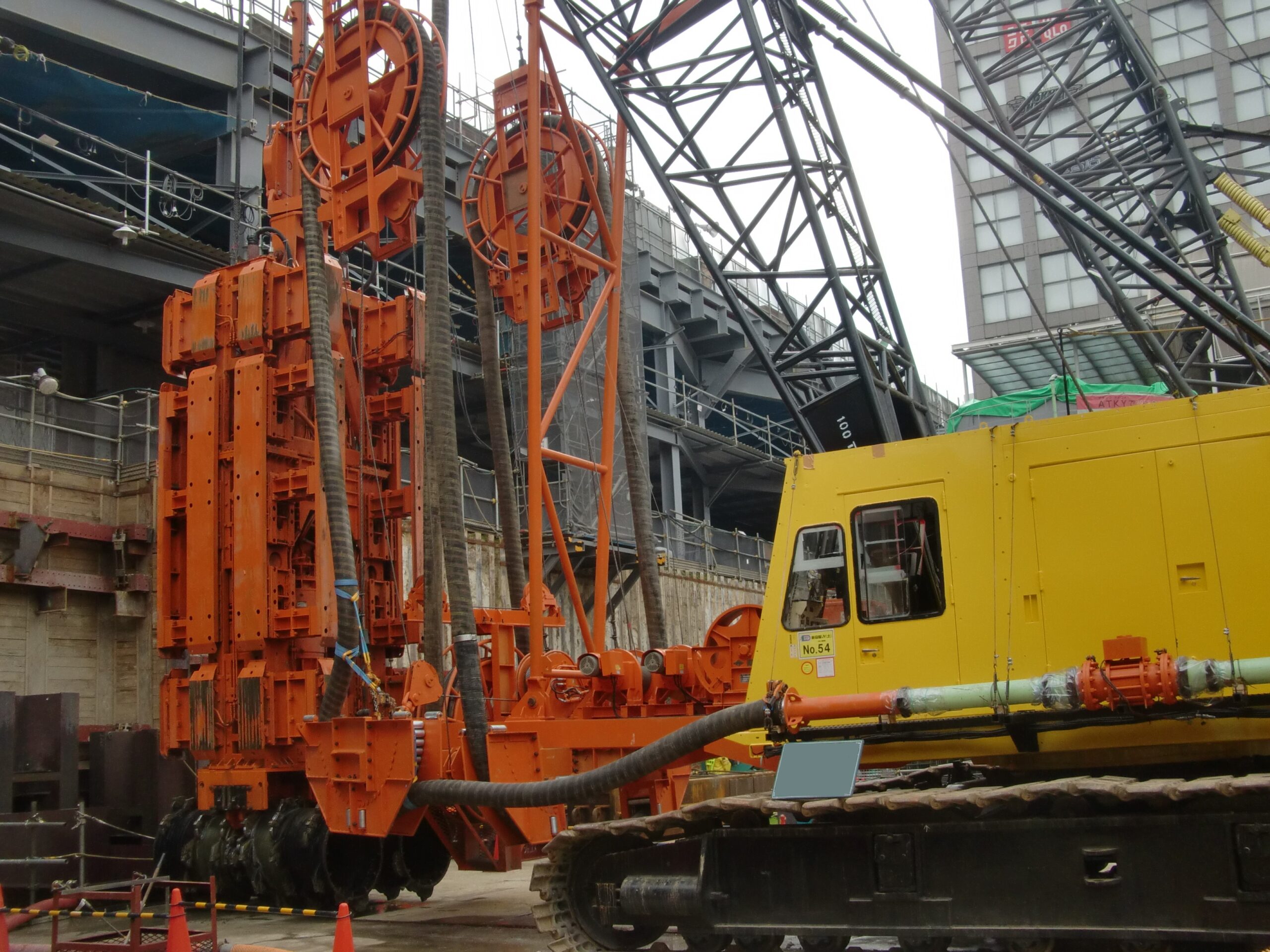
CMX (Diaphragm Wall Construction Method)
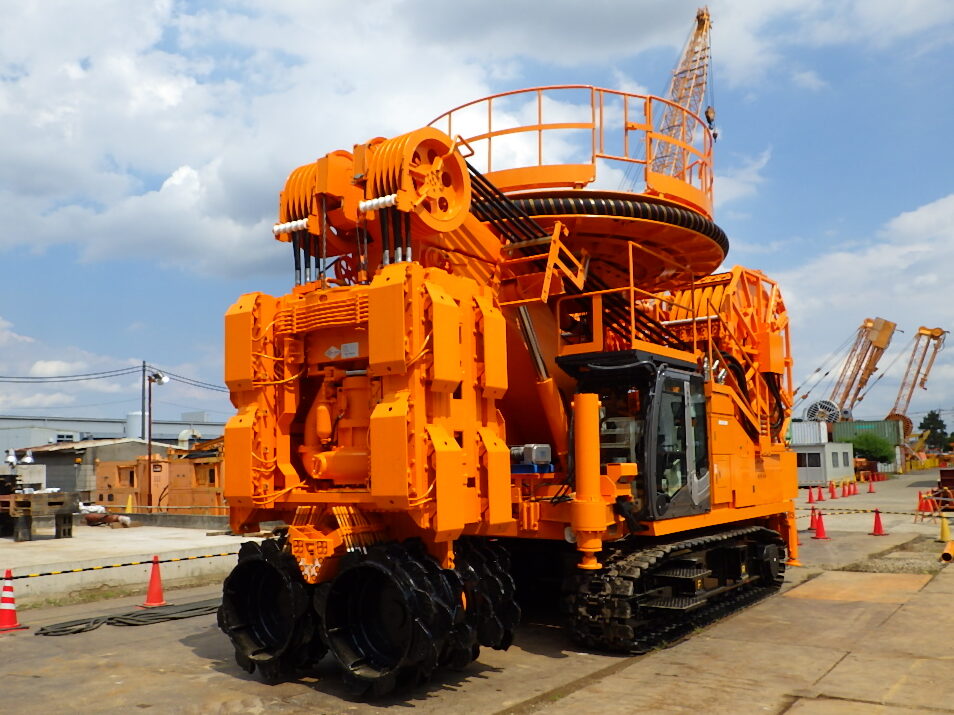
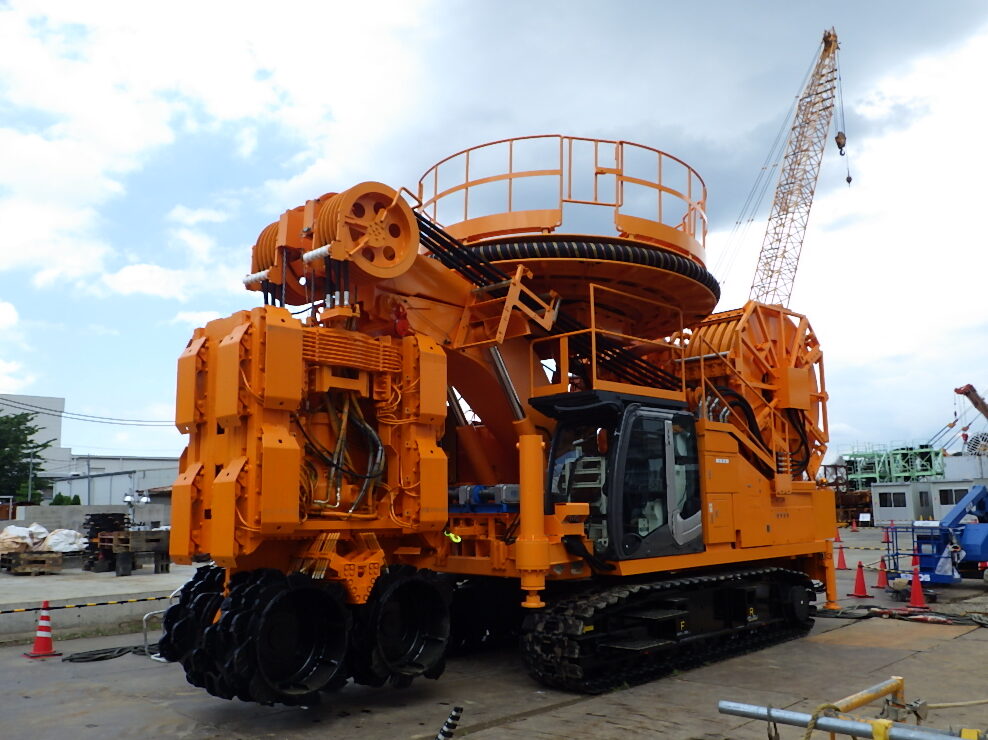
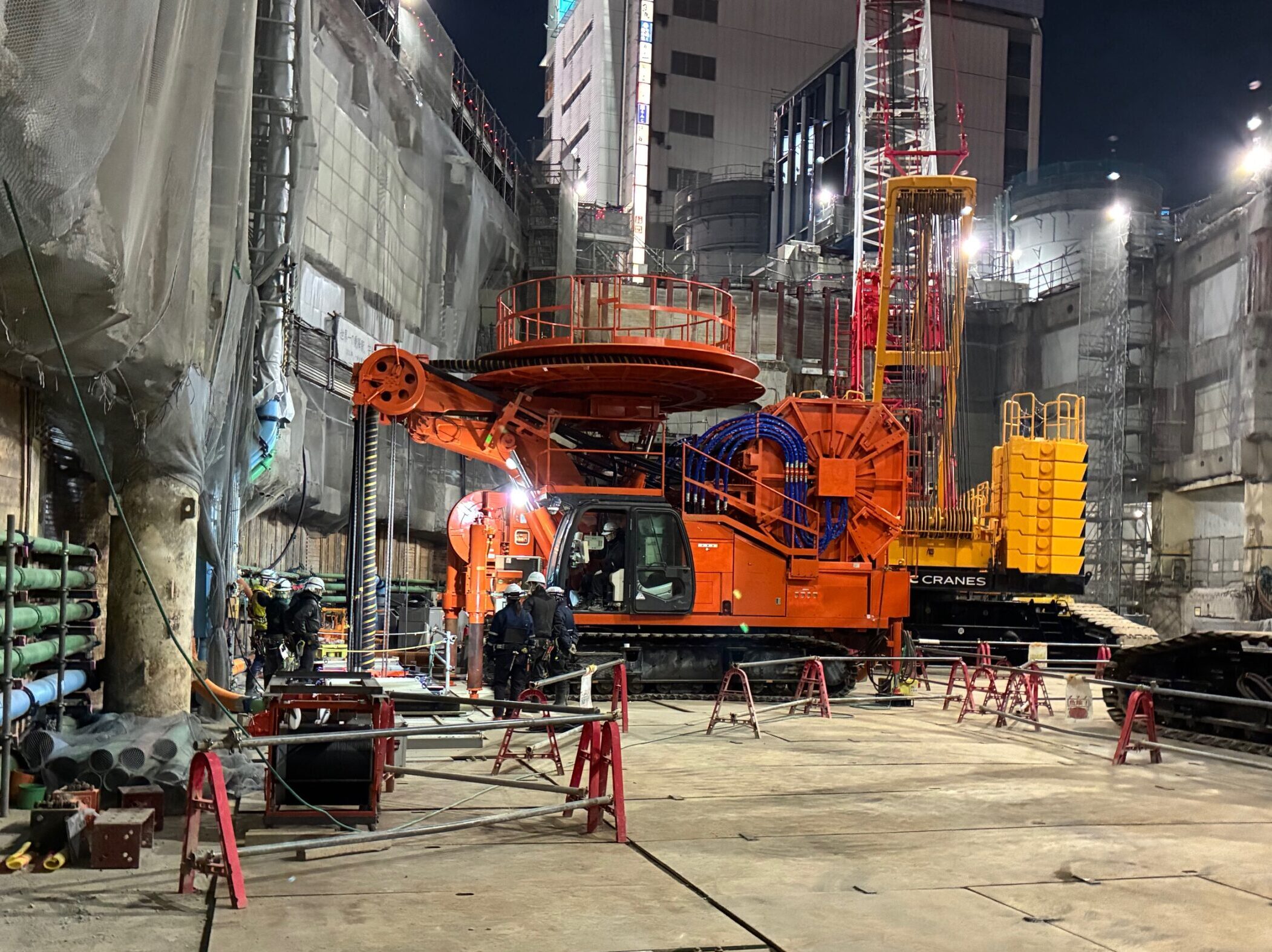
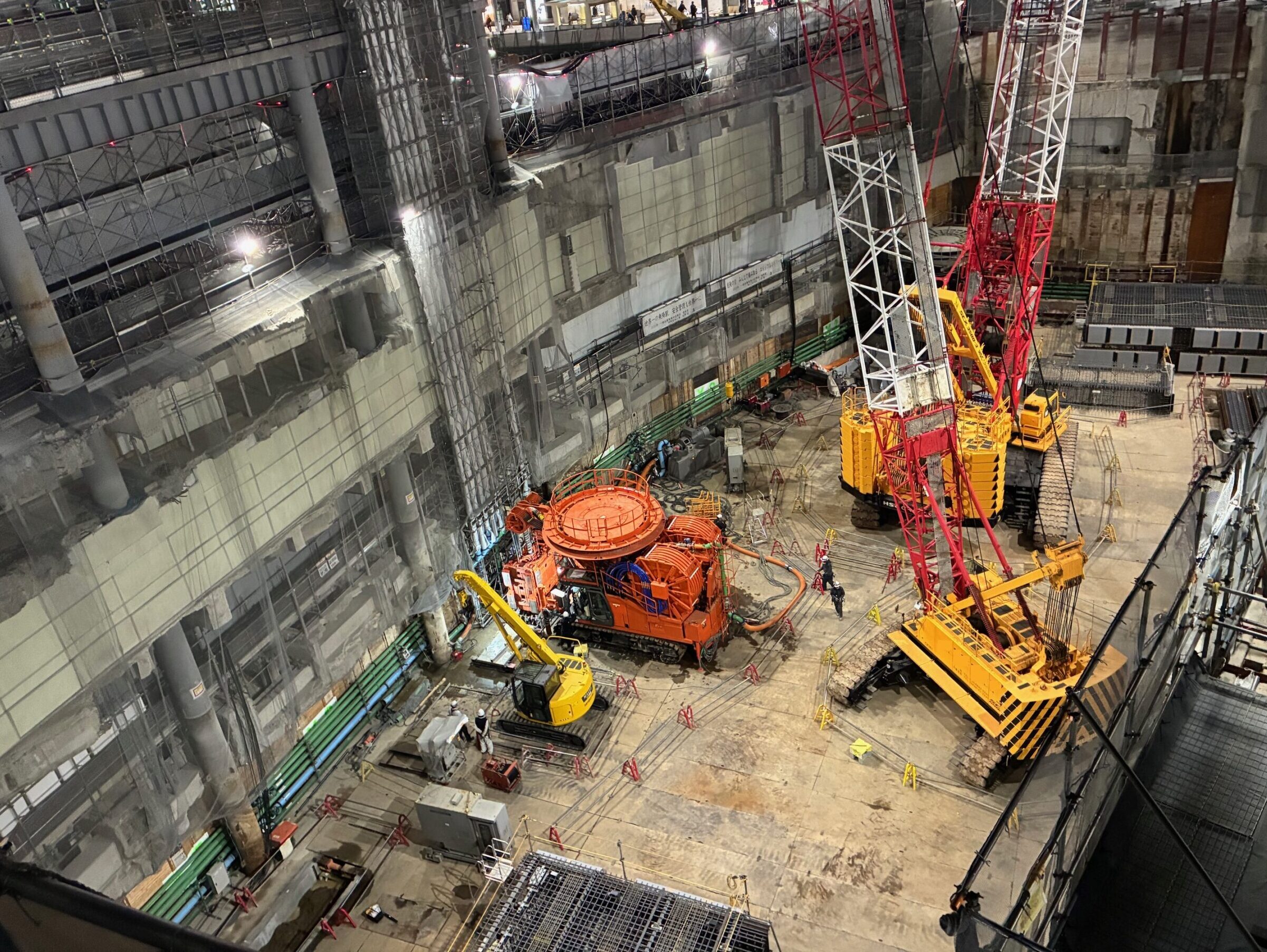
The latest-generation diaphragm wall drilling machine designed with specifications optimized for low-headroom and confined job sites, enabling operation under elevated structures and beneath roadways.
Features
- The special low-headroom drilling system enables construction at a machine operating height of 5,100 mm.
- By adopting a newly developed base machine, corner-area construction at building sites is made possible.
- A high-torque specification with a drilling torque of 80 kN·m is employed.
- Assembly time compared to conventional drilling machines has been reduced by approximately 40%.